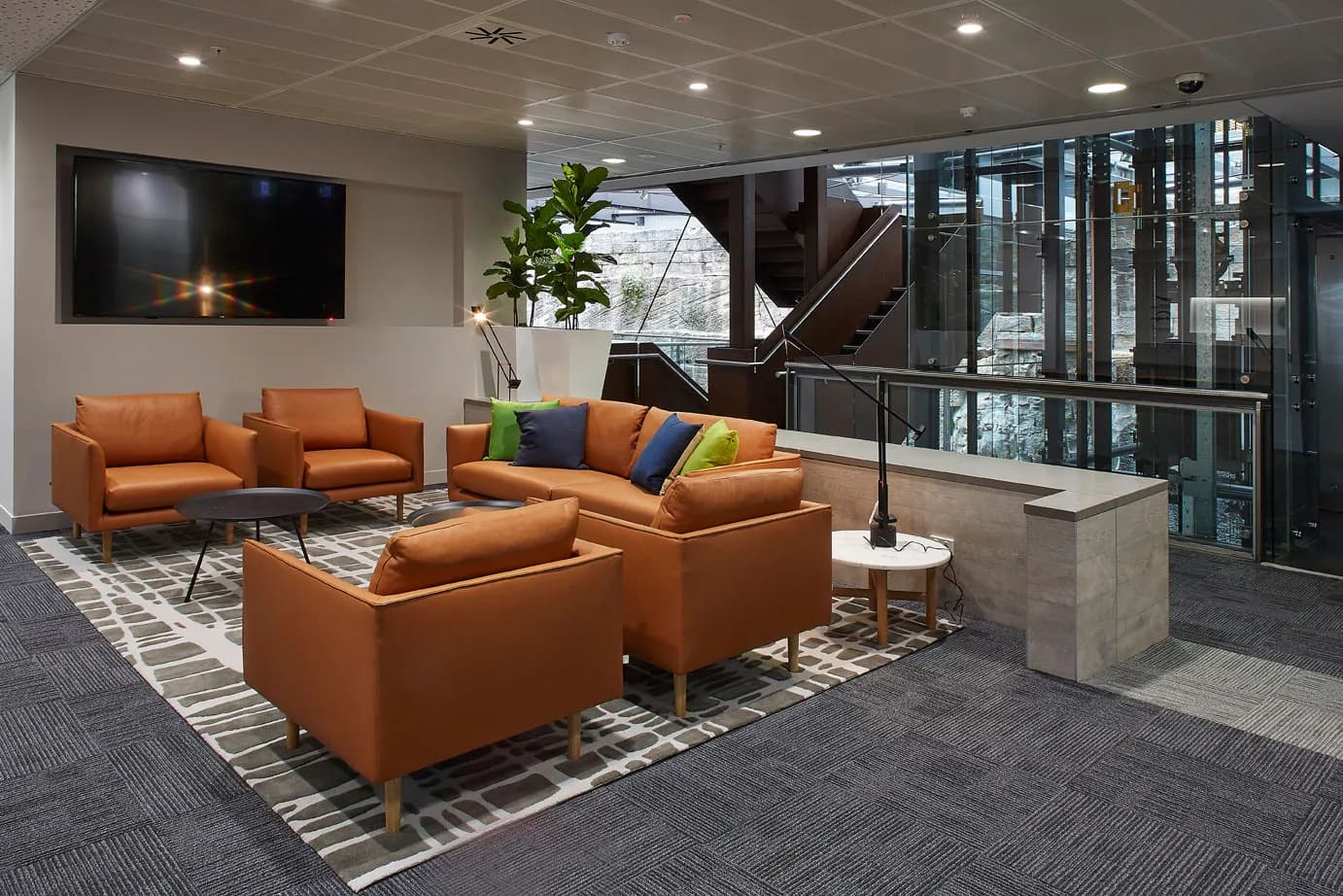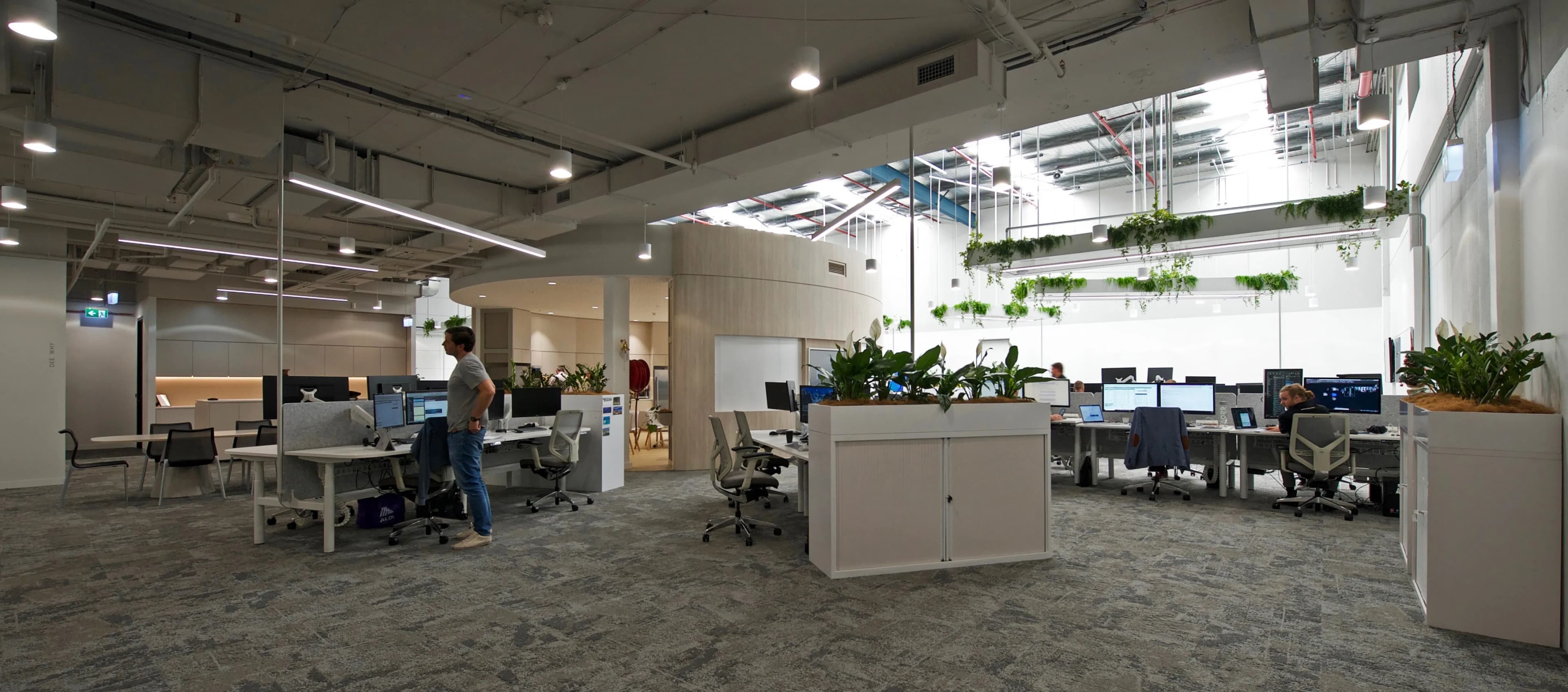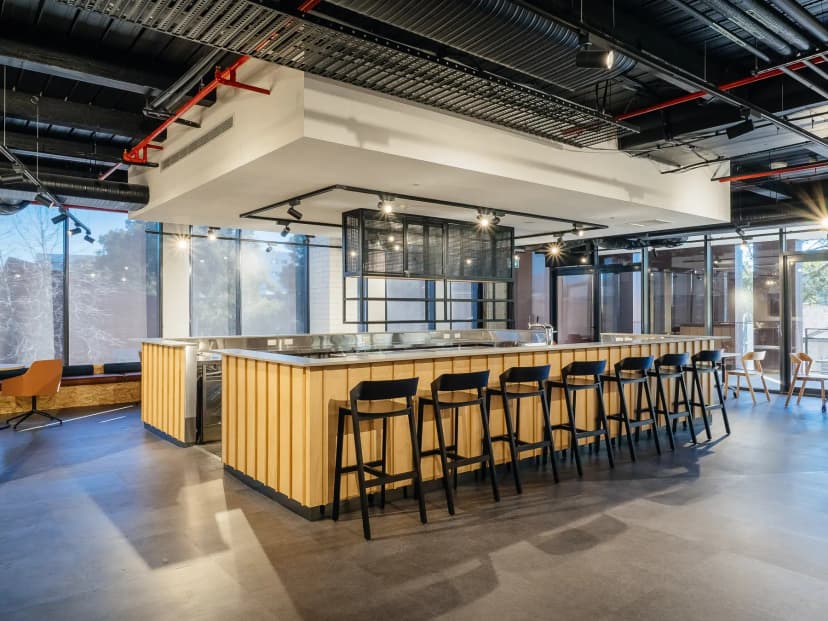
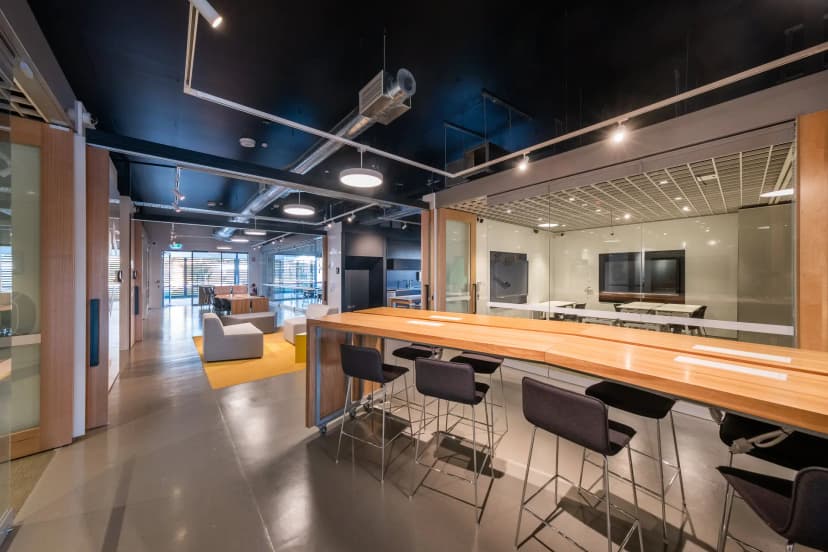
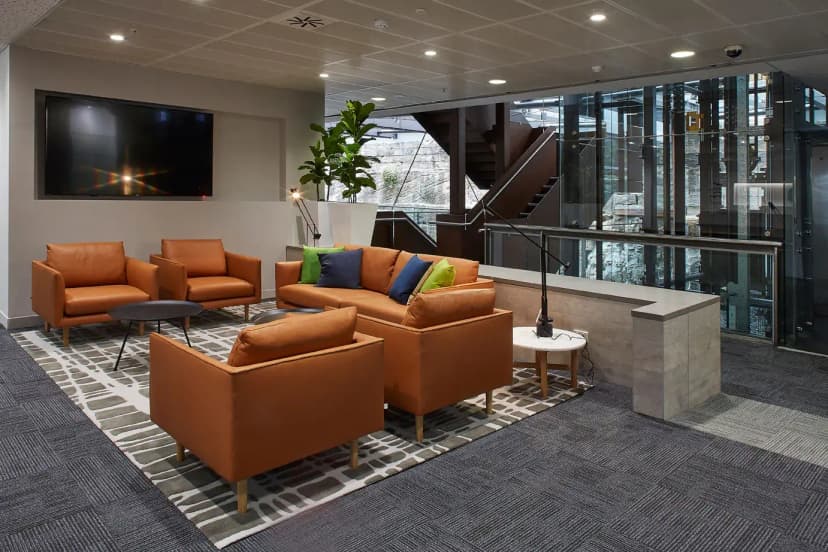
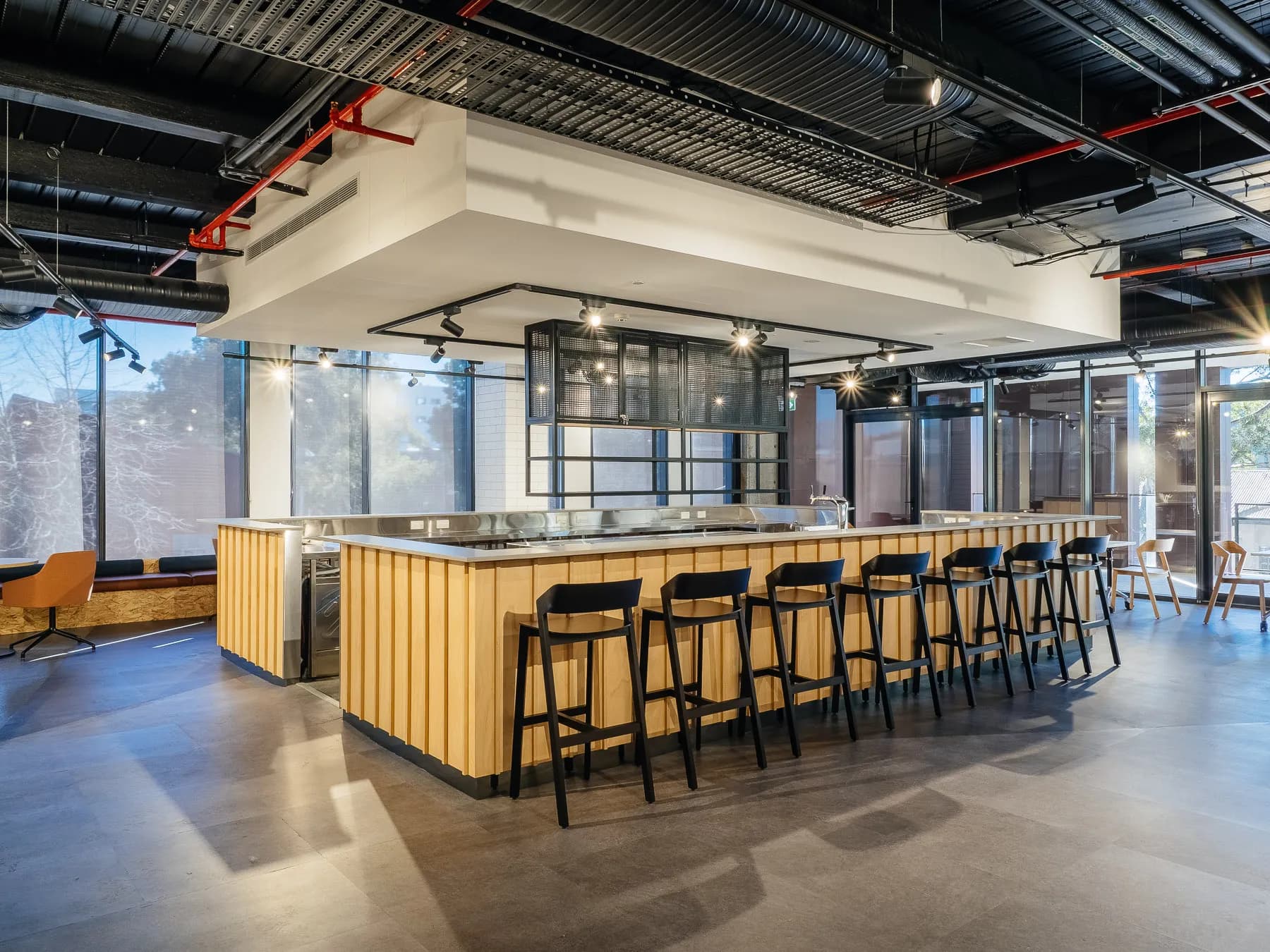
William Angliss Institute Commercial Fitout
Alexandria, Sydney

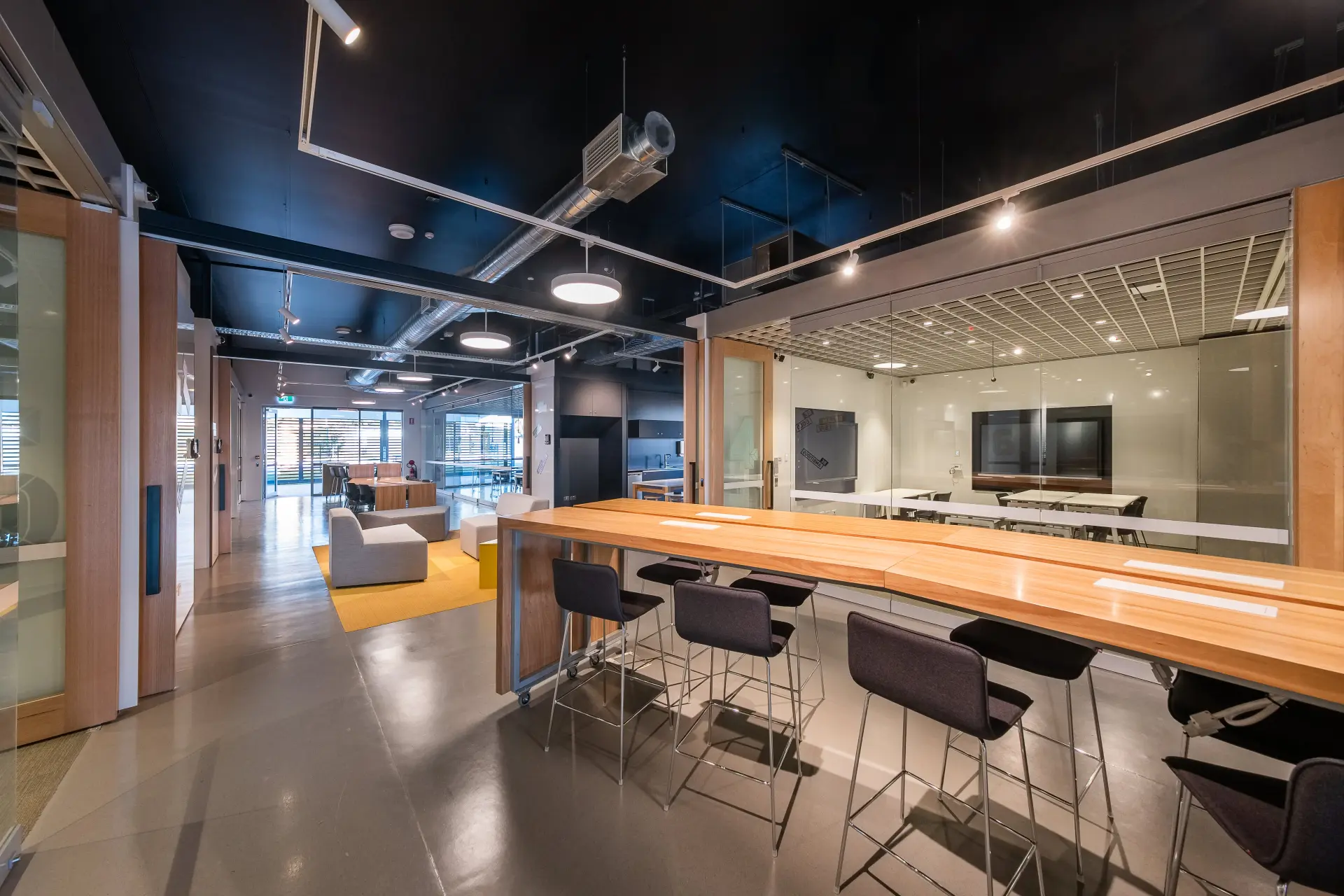
A demountable partition system is a fixed installation designed for removal and reinstallation. Every component comes apart without damaging the host building. As part of our office partition solutions, Stemar installs demountable systems for businesses that cannot predict their next configuration but refuse to pay twice for the same walls.
A top track is fixed to the ceiling, a bottom track to the floor. No structural modification to the building fabric. Clean track removal is what makes full reinstatement possible at lease end.
Panels slot into the top track and clip to the bottom track. Widths from 600mm to 1200mm, heights from 2400mm to floor-to-ceiling. Solid and glass panels mix in the same system.
Glass demountable partitions use 10mm to 12mm toughened or laminated glass. Double-glazed panels deliver acoustic performance rated Rw 32 to Rw 45. A meeting room can have a glass front and solid sides without changing the track spec.
Panels lift out of tracks. Tracks are removed from floor and ceiling. The substrate returns to base build condition. No demolition, no patching, no waste. Panels retain their full functional value for the next site.
Two categories that overlap in marketing language but diverge on priorities. Demountable optimises for reconfiguration after install. Modular optimises for speed and consistency on the way in.
Your primary concern is reconfiguring the workspace over time, adapting to headcount changes, or preserving capital value across multiple lease cycles. The system pays for itself through reuse.
Your priority is fast, standardised installation with pre-certified acoustic and fire ratings. Our modular partition systems page covers that approach in detail.
Standard panel dimensions and track profiles mean future reconfigurations are not tied to one manufacturer. The system you install today can be serviced or extended by any qualified installer with compatible components.
Every demountable partition installation is a bet that the floor plan will need to change. Stemar schedules reconfiguration work outside business hours and stages delivery so your team is not displaced while the layout shifts.
Demountable panels go up in a single day, creating a fully enclosed room for client calls and focused work without touching the existing fitout. If the team structure changes again, the room comes down in hours and the panels are stored or repositioned.
Instead of demolishing plasterboard and rebuilding, the partitions are unclipped from their tracks, shifted to the new position, and reinstalled. Same panels. New layout. Work happens after 6pm and the team walks into a reconfigured floor.
Make-good obligations are satisfied by clean panel and track removal. The floor is returned to base build condition. Panels are stored, relocated, or repurposed. The capital value of the partition system travels with the business to the next address.
A reorganisation collapses two teams into one floor and breaks the existing room map. Panels move to the new boundaries over a weekend. No demolition, no waste skips, no rebuild contractors on site.
Demountable partitions cost more per linear metre than standard plasterboard at initial installation. The question is whether the lifecycle arithmetic changes the calculation. It does.
A permanent partition demolished at lease end is a total write-off: materials, labour, demolition, waste removal, and make-good patching. A demountable system retains capital value across multiple configurations and tenancies.
Reusable panels amortise the original investment across multiple layouts. The asset travels with the business, not into a skip.
Clean panel and track removal returns the substrate to base build. No demolition, waste removal, or patching costs at lease end.
The number you receive is the number you pay. Scoped to your floor plan and lease requirements before any work commits.
The financial case for demountable partitions is clear. The environmental case follows the same logic: reuse beats replacement. Demountable partitions are one part of our broader sustainable office refurbishment approach.
Panels removed at lease end are stored and reinstalled at the next site. The capital investment travels with the business, not into a skip bin. A single set of demountable partitions can serve three or four tenancies over a decade, avoiding the material cost of manufacturing new walls.
Demountable systems break the build-demolish-dispose pattern that permanent partitions create. Panels that leave one site arrive at the next. The waste stream shrinks with each reuse.
The embodied carbon of the original manufacturing is amortised across multiple installations rather than written off at each lease cycle. If the business decides not to reinstall, panels can be repurposed, offered to the incoming tenant, or recycled through aluminium and glass recovery streams.
Demountable partitions sit alongside material recovery, ceiling reuse, and joinery refresh within Stemar's sustainable refurbishment scope.
Capital value is preserved across moves and reconfigurations. The system you fund today is a multi-cycle asset, not a single-tenancy expense.
Discover our latest commercial projects across Sydney. From corporate headquarters to medical facilities, each project showcases our expertise in creating productive, innovative workspaces that align with our clients' vision and requirements.
Questions we field most often about demountable office partitions in Sydney, from mechanics and cost to lease-end reinstatement.