
Office partition ideas for industrial buildings have to solve problems you do not see in CBD fitouts. Stemar Group is based in Wetherill Park and delivers warehouse and shed partition projects across the Smithfield-Wetherill Park corridor every week. Growing industrial businesses need functional office space inside their sheds. Not a CBD-style fitout, not a generic partition wall dropped into a clean commercial suite. They need solutions that actually work inside a warehouse.
What are office partition ideas for industrial buildings? They are partition designs adapted to warehouse environments: handling high ceilings, exposed services, slab vibration, and dust ingress, while meeting the fire compartmentation and acoustic standards required when an industrial shed is partly converted into office space.
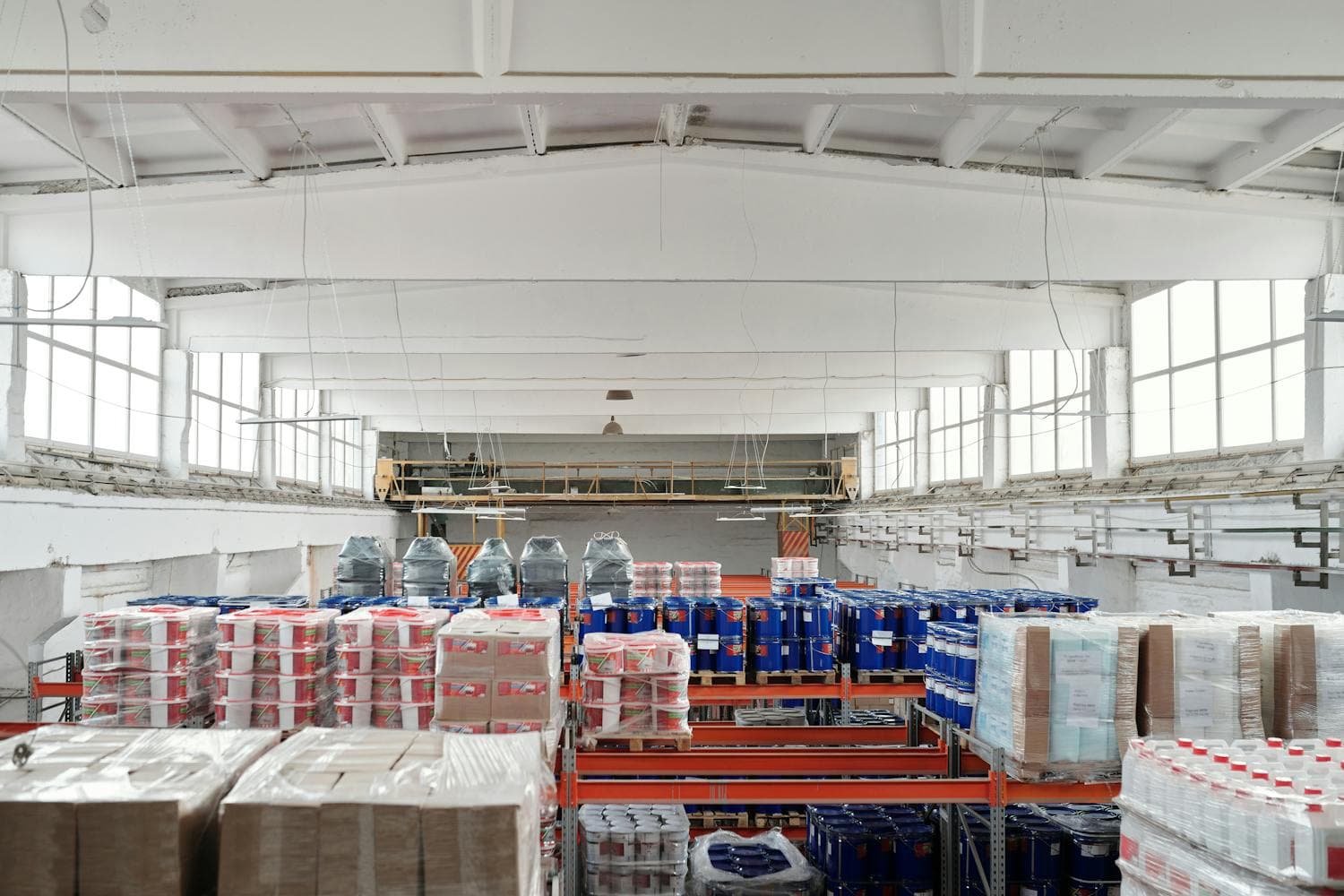
The structural realities of industrial buildings make most generic advice useless. You are dealing with high ceilings, exposed services, concrete slab floors, heavy-vehicle vibration, and constant dust ingress. Then there is the compliance layer. Converting warehouse area into office space can trigger a change of building classification under the NCC from Class 8 to Class 5, depending on use. That may require a DA or CDC approval through your local council in NSW, and fire-rated partition systems are typically mandatory under NCC Volume One once you enclose offices inside a warehouse.
Every idea in this guide has been delivered by Stemar Group in real industrial spaces, not sketched on a whiteboard.
Partitioned Mezzanine Offices That Make the Most of Vertical Space
When your ground floor is earning its keep with racking, dispatch, or production, building upward makes sense. Mezzanine-level offices inside warehouses create usable workspace for 15 to 150 staff without eating into operational floor area, typically delivering 30 to 50% more usable office capacity from the same building footprint.
The partition choices on a mezzanine depend on what each room needs to do. Full-height plasterboard walls suit manager offices and accounts rooms where acoustic privacy matters. Acoustic performance ratings (Rw values) governed by NCC Section F and AS/NZS 2107 set the benchmark for meeting rooms above open warehouse spaces. Glazed partitions work well where supervisors need sightlines over the warehouse floor below.
Our Pro AV Solutions project is a good example. Their business needed more office capacity but could not afford to lose warehouse floor area. Stemar Group built partitioned mezzanine offices housing their growing team across multiple private and meeting rooms, with a mix of solid and glazed walls. The layout decisions came down to who needed acoustic separation and who needed visual connection to the floor.
Mezzanine projects often involve broader warehouse fitouts beyond just partitioning. Electrical, HVAC, fire services, and partition trades all need to work in sequence, which is why multi-trade coordination under one project manager matters here. Stemar Group has delivered warehouse office fitouts across Western Sydney for over a decade.
Warehouse-to-Office Conversions with Full-Height Partition Walls
This is the most common scenario Stemar Group sees in Smithfield-Wetherill Park. A business outgrows its existing office footprint but has spare warehouse area sitting underused. The solution is converting a section of warehouse floor into permanent office space.
Full-height partition walls running from the concrete slab to the underside of the roof or ceiling are typically required here. The reasons are practical and regulatory:
- Fire compartmentation demands complete separation between office and warehouse zones. Steel-stud plasterboard systems deliver the required fire ratings under NCC Volume One, typically 60/60/60 or 90/90/90 FRL depending on the building classification and fire compartment size.
- Acoustic separation keeps warehouse noise out of phone calls and meetings. Insulated walls can reduce transmitted noise by 35 to 50 dB.
- Sealed walls manage dust and allow the office zone to be independently climate controlled.
Material choices need to suit the environment. Concrete floor preparation is often needed to create level partition footings on slabs designed for forklifts rather than office furniture, and typically adds 5 to 10% to the project cost.
Council approval is part of the process. Cumberland City Council and Fairfield City Council, which cover the Smithfield-Wetherill Park area, may require a Construction Certificate or Complying Development Certificate for internal fitout works above certain thresholds. Stemar Group handles the compliance pathway as part of the project scope.
Glass Partitions for Customer-Facing Reception Areas Inside Industrial Sheds
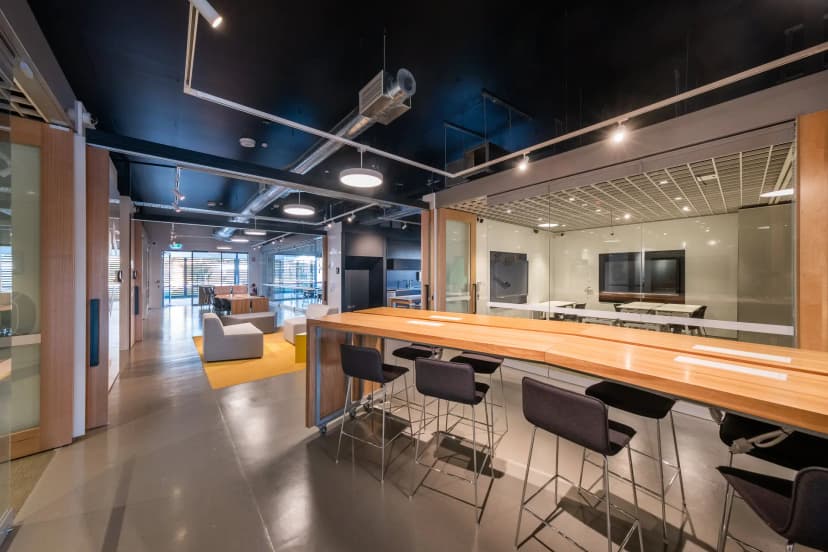
First impressions matter when clients visit your warehouse. A professional reception or showroom area inside an otherwise industrial building changes how people perceive your business. Glazed partition systems create a clean entry zone. Frameless glass gives a contemporary feel, aluminium-framed glass walls offer durability, and hybrid glass-plasterboard combinations let you keep some walls solid for services or storage while using glass where visibility and light matter most.
Our Clorox Australia project demonstrates this well. Stemar Group created customer-facing spaces within their industrial facility, delivering a glazed reception and meeting suite over a 4-week staged programme while production continued uninterrupted. The space carved a professional corporate front out of a raw industrial shell.
Acoustic performance is a consideration with glass. Meeting rooms behind glass partitions still need adequate sound insulation, and double-glazed or laminated glass typically achieves Rw 35 to 42, closing the gap between aesthetics and acoustic privacy.
Supervisor Offices and Training Rooms on the Warehouse Floor
Not every office sits on a mezzanine or in a converted bay. Supervisor stations, dispatch offices, induction rooms, and first aid rooms often need to sit directly on the warehouse floor, right where the action is.
The challenges are specific. Forklifts and heavy vehicles generate vibration that transfers through the slab. Dust from warehouse operations infiltrates poorly sealed partitions, and warehouse traffic creates impact risk. Supervisors still need clear sightlines over operations.
Practical solutions include impact-resistant plasterboard rated for high-traffic zones, toughened glass or polycarbonate viewing panels, sealed junctions at floor and ceiling to manage dust, and robust door hardware that handles constant use. Stemar Group delivers these projects with staged construction and after-hours work so your warehouse keeps operating, and provides fixed-price quotes with no hidden surprises.
Demountable Partitions for Leased Industrial Space
If you are leasing your warehouse, permanent structural changes may not make sense. Demountable partition systems let you create office space without locking value into a building you do not own. The trade-offs are summarised below:
| Feature | Demountable | Permanent partition walls |
|---|---|---|
| Fire rating capability | Limited | Full (60/60/60 to 90/90/90 FRL) |
| Relocatable at lease end | Yes | No |
| Best for lease length | Under 5 years | Long-term or owned |
| Cost recovery / asset value | Retained as business asset | Sunk fitout cost |
| Council compliance (CDC/CC) | May still apply | Required above thresholds |
Demountable walls suit open-plan office areas and non-fire-rated zones. Where fire compartmentation is required or council compliance demands a specific FRL rating, permanent partition walls are still necessary. Stemar Group identifies which zones need permanent fire-rated walls and which can use demountable systems, so you get the right solution in each area.
Partitioned Amenities and Breakout Areas Inside Industrial Buildings
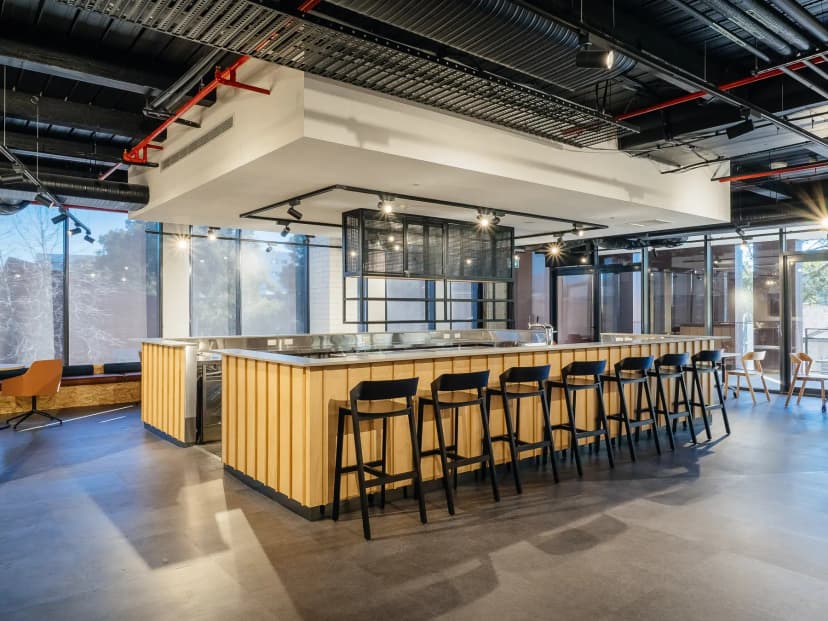
Staff amenities inside warehouses need more than a partition wall and a kettle. Kitchens, lunch rooms, change rooms, shower facilities, and breakout spaces each have specific requirements: waterproof linings behind partitions for wet areas, ventilation that meets NCC requirements, mandatory fire separation between amenity zones and warehouse areas, and plumbing rough-in coordinated before partition walls go up.
This work involves plumbing, electrical, ventilation, waterproofing, and partition trades sequenced under one Stemar Group project manager, which avoids the trade-to-trade clashes that typically blow out timelines by 20 to 30%.
Installing Partitions in a Live Warehouse without Shutting Down Operations
The question Stemar Group hears most often is not about materials or design. It is about disruption. Can you build this while we keep working? Yes. Here is how Stemar Group sequences partition installation around live warehouse operations:
- After-hours and weekend work for noisy or disruptive tasks like cutting steel stud and fixing to concrete.
- Staged construction zones with temporary hoarding to separate the build area from active operations.
- Dust containment during cutting and fixing to protect stock and equipment.
- Coordinated material deliveries timed to avoid blocking loading docks during peak dispatch hours.
Industrial partition projects in live environments need someone managing the sequence, not just swinging a hammer. Read the full warehouse office fitout planning guide if your project scope extends beyond partitioning.
Frequently Asked Questions About Office Partitions in Industrial Buildings
Do I need council approval to partition my warehouse into offices?
Possibly. In NSW, internal fitout works that change the building classification from Class 8 (warehouse) to Class 5 (office) may require a DA or CDC through your local council. Stemar Group identifies the compliance pathway during the on-site assessment.
What fire rating do partition walls need inside a warehouse?
Fire-rated partitions are typically required under NCC Volume One, with the specific FRL rating depending on building classification and fire compartment size (see the warehouse-to-office section above for the standard rating bands).
How long does a warehouse office partition project take?
Timelines vary with scope. A single supervisor office on the warehouse floor may take 1 to 2 weeks. A full mezzanine office fitout with multiple partitioned rooms, services, and amenities typically runs 4 to 8 weeks. Stemar Group provides a project timeline with every fixed-price quote.
Can partitions be installed while my warehouse is operating?
Yes. Stemar Group stages work around live operations using after-hours scheduling, temporary hoarding, and dust containment to minimise disruption to your team and your customers.
What is the cost range for partitioning offices inside a warehouse in Sydney?
Cost depends on the partition type, fire-rating requirements, service integration, and the scope of council compliance. A fixed-price quote after an on-site assessment is the only reliable way to get an accurate figure for your specific space.
Start with an On-Site Assessment of Your Industrial Space
Industrial partition projects cannot be quoted from a floor plan alone. Ceiling heights, existing services, floor conditions, fire requirements, and access constraints all affect what is possible and what it costs. A site visit is the starting point.
If you have been let down by builders who did not understand industrial environments, or ghosted because your project was considered too small, you are not alone. That is a common experience in this part of Sydney.
Stemar Group is based in Wetherill Park and works across Western Sydney’s industrial corridor every week. You get direct contact with the owner, a fixed-price quote after the site walkthrough, and a contractor who understands office partition walls inside working sheds.
Contact Stemar Group to book a free on-site assessment of your warehouse or industrial space.