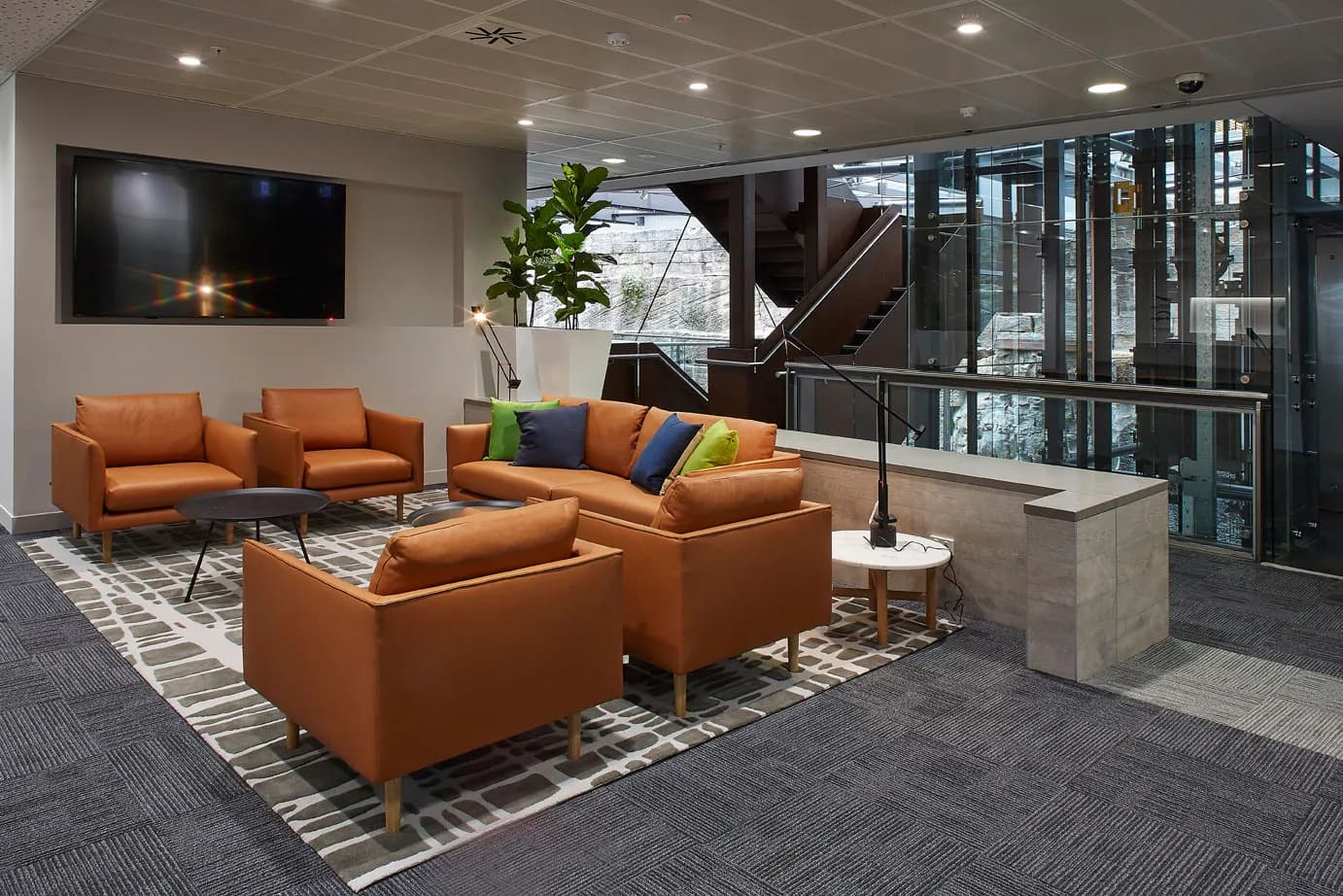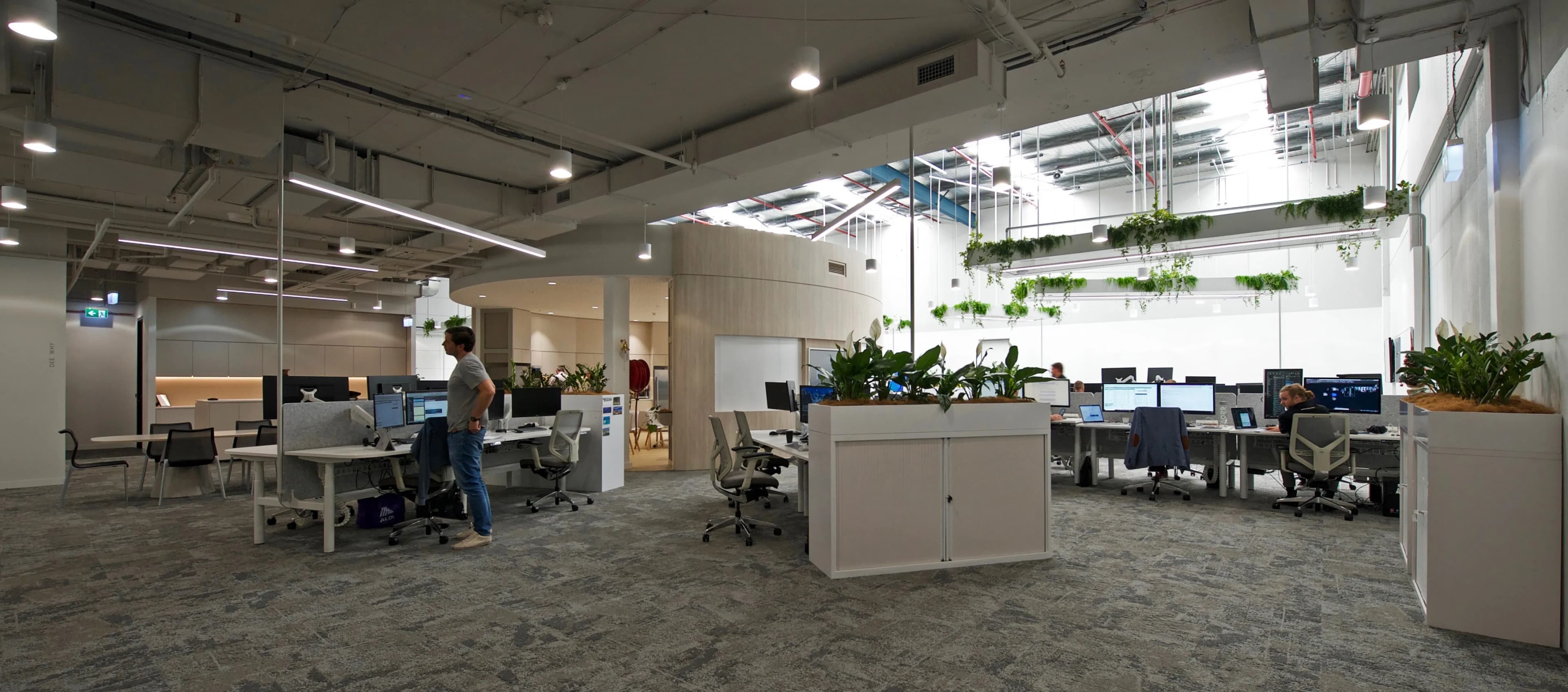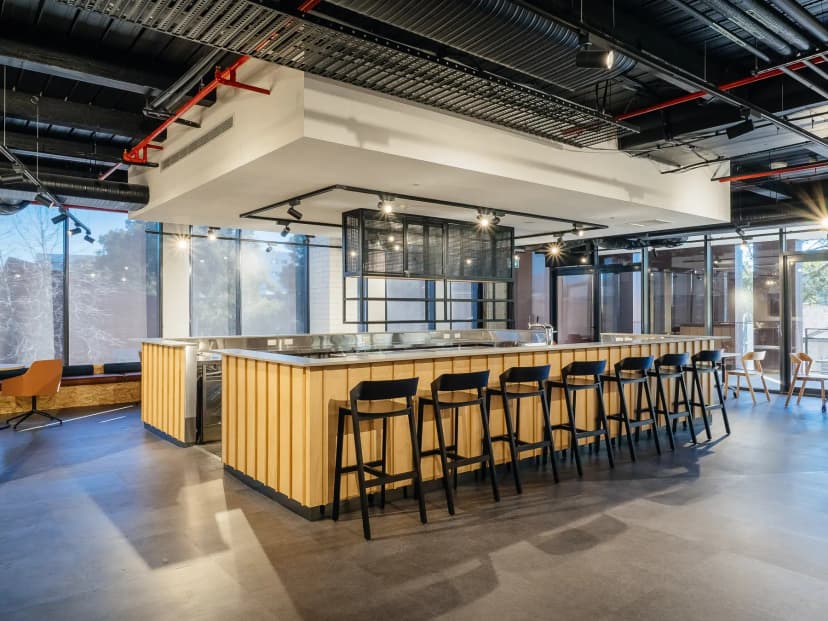
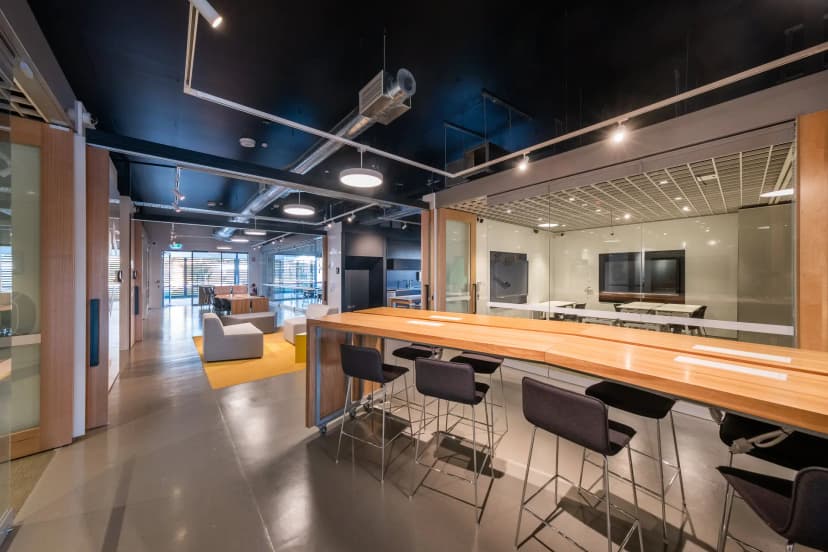
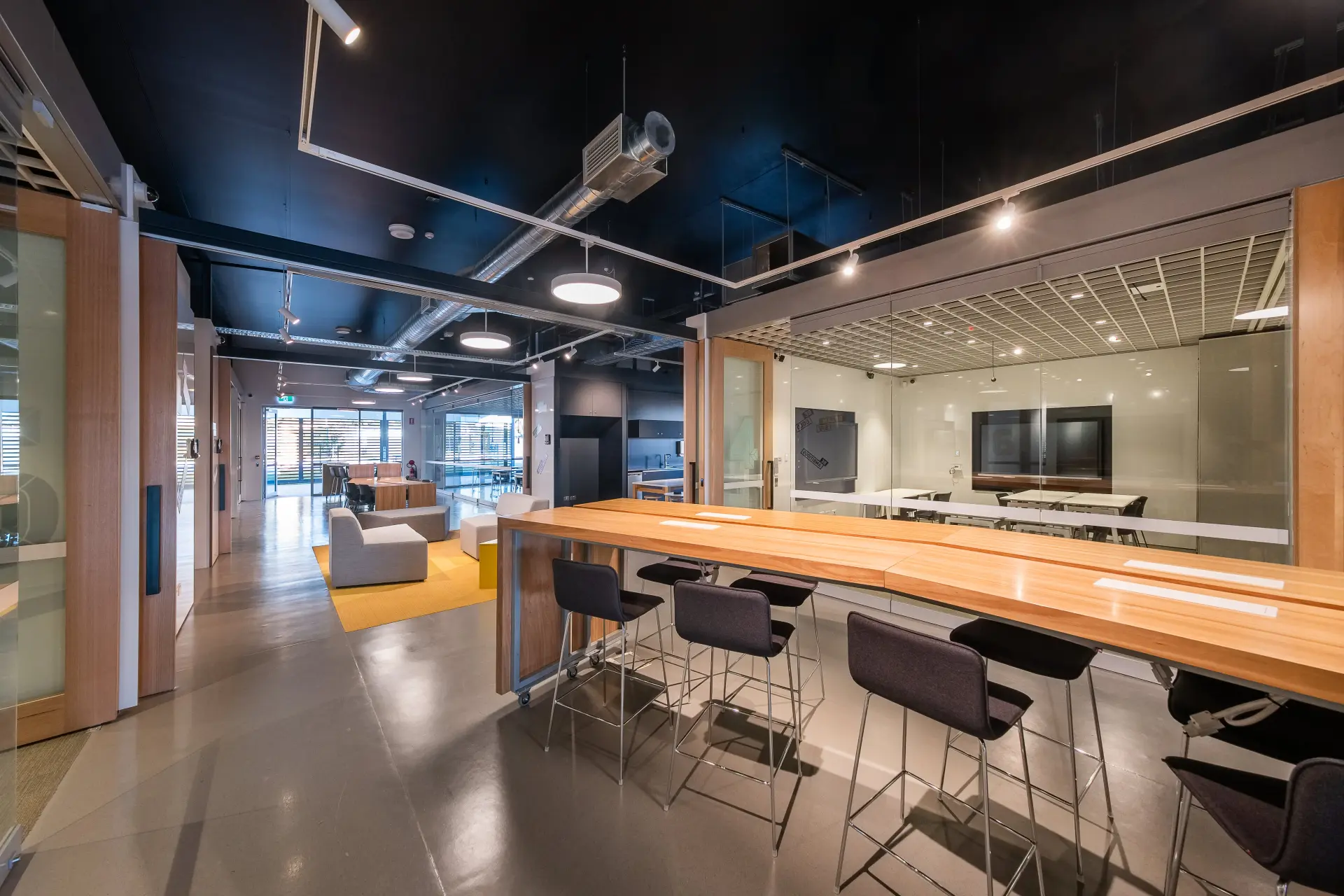
William Angliss Institute Commercial Fitout
Alexandria, Sydney

Five configurations, each built for a different workplace problem. The right glass partition depends on what the space needs to do, not just how it looks.
A meeting room that needs speech privacy requires a different system from an open-plan floor that needs visual separation. Full-height glass installations that function as structural divisions are covered on the office partition walls page.
For open-plan offices where uninterrupted sightlines and a minimal profile matter. Channel or patch fittings at floor and ceiling, no vertical mullions. Best suited to professional services floors. Not for acoustic separation above Rw 35.
For spaces that need defined structure, integrated door frames, and a more traditional commercial finish. Aluminium framing provides rigidity for door hardware and integration with access control systems.
For boardrooms and client-facing spaces that toggle between transparent and opaque at the press of a switch. PDLC film requires a dedicated low-voltage power supply, coordinated with your electrical fitout before glass installation begins.
For hybrid layouts that need visual separation without full acoustic isolation. Timber or aluminium framing supports glass panels to 1,500mm or 1,800mm. Common in collaborative work zones. Not for speech privacy.
Where glass adjoins fire-rated walls, corridors, or exit paths, the glazing must be tested and certified to AS 1530.4. We identify fire compartmentation requirements at specification stage and source glazing with the correct fire rating.
If you have identified your configuration and want to move straight to a quote, book a site walkthrough. A Stemar principal visits your site, assesses the space, and returns a fixed-price scope within days.
For readers who want more detail on specification, sequencing, and compliance before committing, the sections below cover exactly that.
A principal walks your floor, not a sales representative. The person who quotes the project is the person who runs it.
Every pane assessed against AS 1288 for thickness, aspect ratio, and safety glazing before any order is placed.
Base-building approval initiated at quoting stage so the timeline runs alongside procurement, not after it.
These are the mistakes we see on projects quoted by other suppliers. Each creates a compliance liability, a performance failure, or both. Catching them at specification stage costs nothing. Fixing them after installation costs thousands.
AS 1288 sets minimum thickness based on pane area, aspect ratio, and wind load. A meeting room partition specified at 10mm when it needs 12mm is a compliance liability for the building owner and the contractor who signed off. Every pane is assessed against AS 1288 before it is ordered.
An unsealed junction can drop your acoustic rating by 10 to 15 dB. That is the difference between a private meeting room and a fishbowl. Paying for Rw 45 acoustic glass without sealed junctions delivers Rw 30 performance. Seal specification is part of the same scope item as the glass.
Frameless glass relies on channel or patch hardware at floor and ceiling. Pivot, hinge, and closer load capacity must be specified against glass thickness and door weight. Under-specified hardware is a common cause of system failure in high-traffic environments. We catch these at design stage.
Strata and managed buildings require landlord or building manager approval before glazing works begin. Leaving it until the install window adds two to four weeks of delay. We submit at quoting stage so the approval runs in parallel with procurement.
Three touch points decide whether the install passes muster with your building manager, your insurer, and the NCC. Stemar handles all three before sign-off.
Every pane sized to AS 1288 for thickness, aspect ratio, and wind load. Safety glazing applied where the standard requires it. Installation certification provided at completion.
Glass and seals specified as one assembly to meet the Rw rating your meeting rooms require. Installed performance documented for your tenancy records.
Fire-rated glass certified to AS 1530.4 where it adjoins rated walls or exit paths. Building manager approvals lodged at quoting stage so they run alongside procurement, not after.
Glass partitions are rarely installed in isolation. They interact with ceiling grids, electrical rough-in, flooring finishes, and sometimes fire services. Office glass partitions delivered as part of a broader commercial office fitout need to be programmed into the right window, not bolted on at the end.
Electrical rough-in and data cabling first, then ceiling grid installation, glass channels and framing, glass installation, hardware fitting, and finally flooring and finishing. Switchable privacy glass requires electrical coordination before glass installation commences.
One point of contact coordinates glaziers, electricians, ceiling contractors, and flooring trades. You are not chasing three different contractors for progress updates.
Materials arrive on site when they are needed, not weeks early. Glass panels are delivered in the installation window, reducing the risk of damage and keeping your workspace clear.
Client-facing spaces cannot have contractors working during business hours. We schedule glass installation for evenings and weekends when operations require it.
Discover our latest commercial projects across Sydney. From corporate headquarters to medical facilities, each project showcases our expertise in creating productive, innovative workspaces that align with our clients' vision and requirements.
Questions we field most often about glass office partitions in Sydney, from cost and configuration to AS 1288 compliance.