
Office fitout ideas are practical design and construction choices that make a workplace easier to use, better for staff, and more credible to clients. The best office fitout ideas do more than refresh finishes. They solve business problems, from productivity and hiring to client confidence, space efficiency, and the daily reasons people choose to come in.
A dated workspace quietly works against you. Productivity drops when the layout fights how people work. Candidates compare your office with every other offer, and clients form an opinion before anyone shakes their hand.
This is the reality behind the flight-to-quality trend across Sydney. Hybrid workers need a stronger reason to commute, and a tired office with flickering fluorescents and a cramped kitchen is not it. Quality of space is now a competitive tool.
You do not need an A-grade lease to create a premium workspace. A well-executed fitout in a B-grade building can deliver the same feel at a fraction of the cost. That is especially relevant for growing businesses with 15 to 150 employees, the ones often too small for Tier 1 builders yet too complex for a two-person operation.
This post is not a gallery of pretty offices. Every idea below is tied to a commercial outcome: productivity, talent, client perception, or space efficiency. Each one reflects the work Stemar Group has delivered for real businesses across Sydney as an office fitout in Sydney specialist.
Fitout Ideas that Drive Productivity
A productive office fitout removes daily friction, supports focused work, and provides teams with the right spaces for how they actually collaborate.
1. Zoned Collaboration Areas
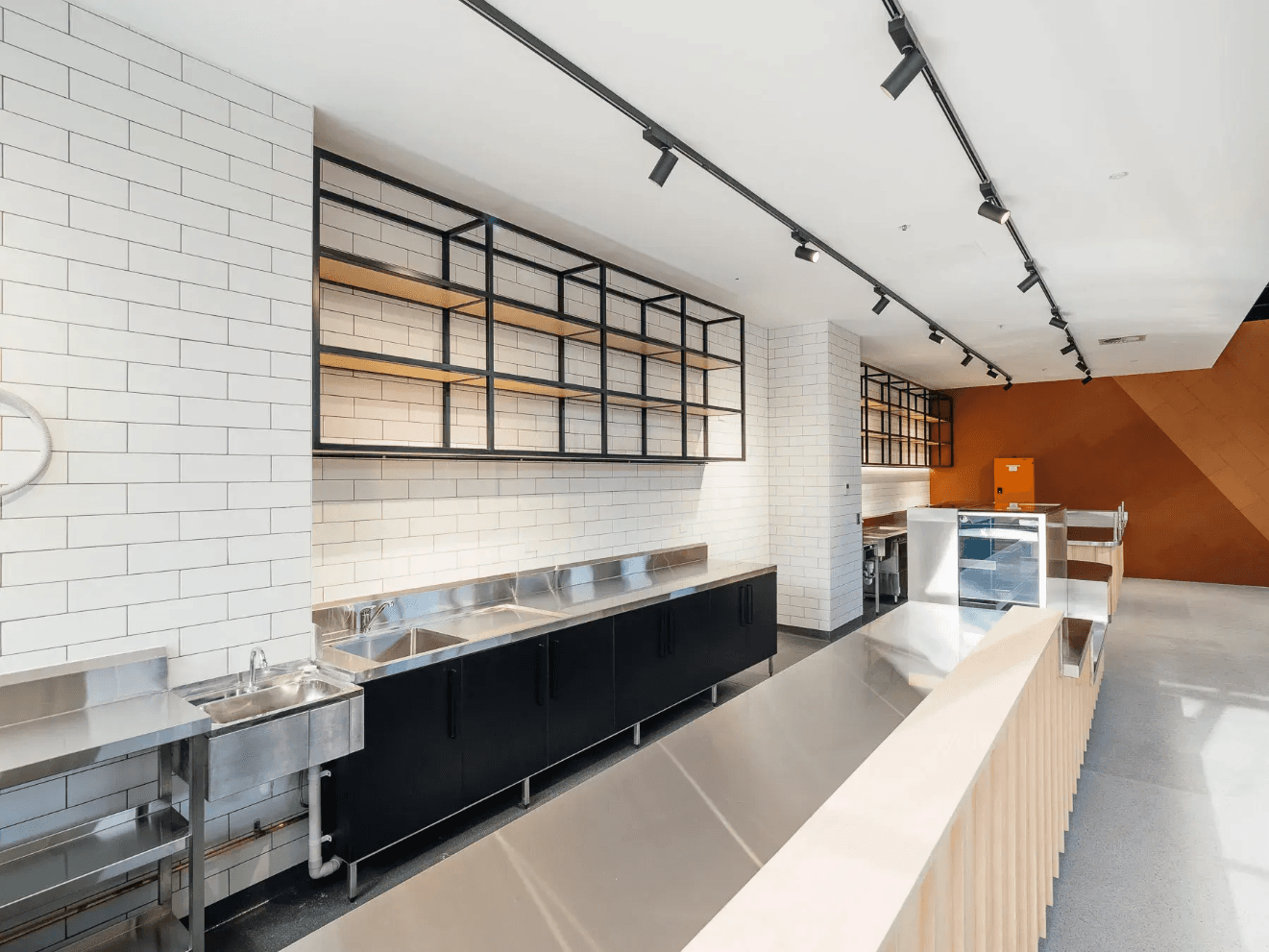
Most offices have the same problem. Four meeting rooms are booked solid, yet half the bookings are for two people who need ten minutes to align. The result is wasted time, interrupted workflows, and staff hovering outside glass doors.
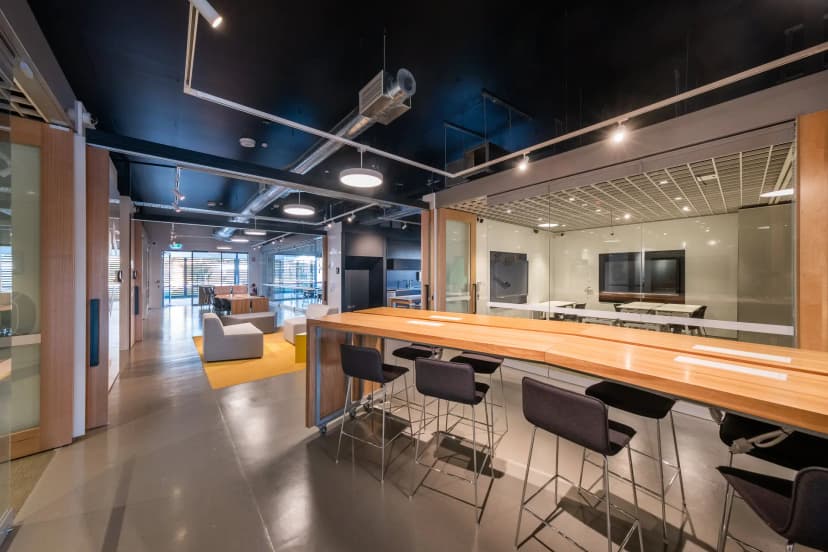
The fix is not more meeting rooms. It has dedicated breakout zones for quick, informal collaboration. A zoned open plan office fitout separates focused work areas from conversation zones, so neither group disrupts the other. In a recent Sydney project, Stemar Group introduced semi-enclosed breakout areas, providing staff with a better space for short discussions.
The key is intentional placement. Breakout zones work best away from heads-down desks and close to the high-traffic paths people already use.
2. Lighting Upgrades
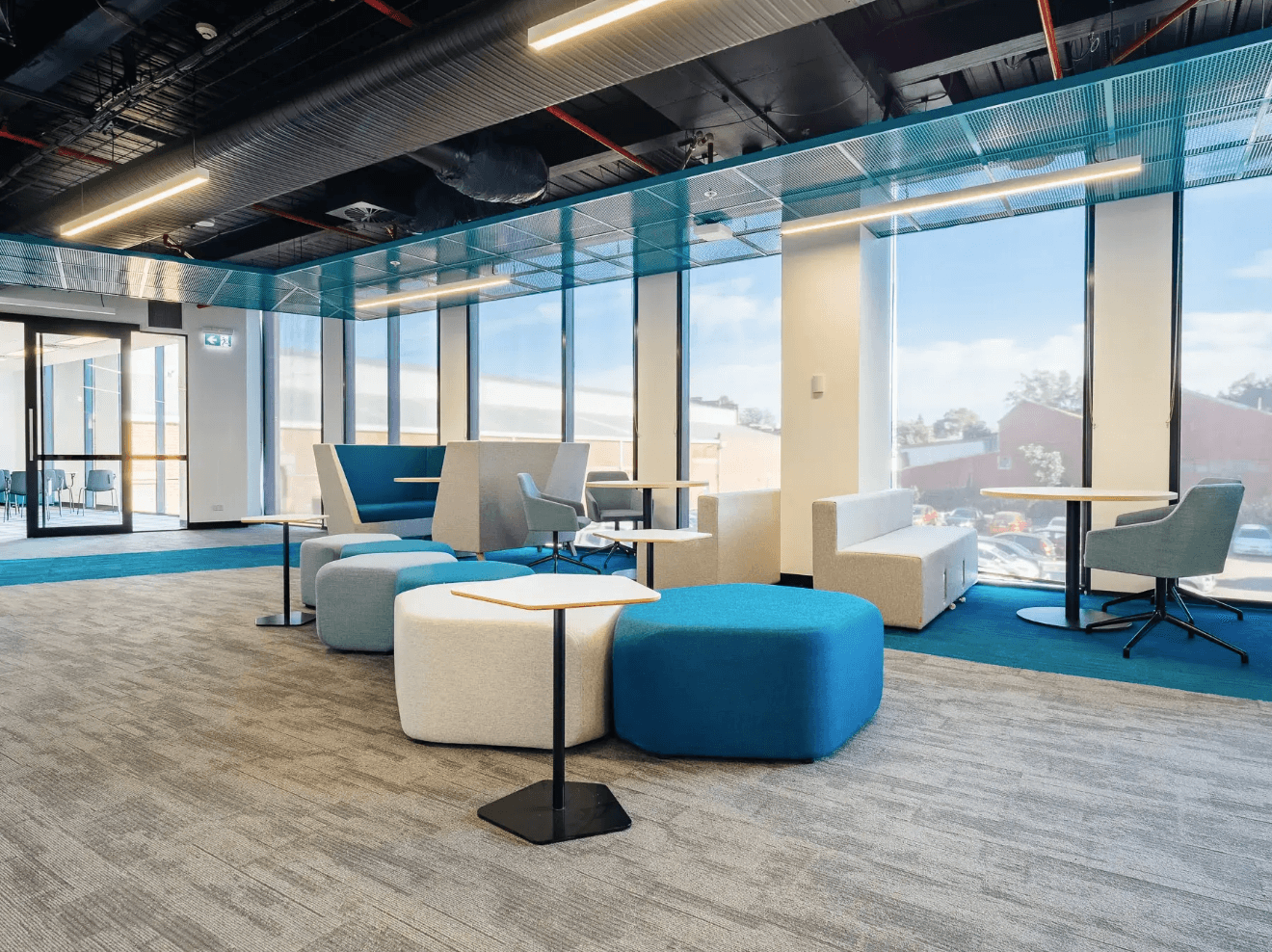
Fluorescent panel lighting is one of the most common productivity drains in older offices. It is flat and harsh, contributing to the mid-afternoon energy crash that sends people reaching for another coffee.
A modern office fitout treats lighting as a layered system. Task lighting gives individuals control. Ambient lighting sets the tone. Natural light, glass partitions, and lower furniture profiles keep energy levels more consistent. This approach aligns with the World Green Building Council's Health, Wellbeing & Productivity in Offices report, which connects daylight, user control, and greener buildings with better workplace outcomes.
In a Stemar Group fitout for a professional services firm in Sydney, lighting was a core design decision from the outset. The team replaced ceiling-mounted fluorescents with pendant lighting, recessed LEDs, and repositioned workstations to take advantage of north-facing windows. LED upgrades can also reduce energy costs and support NABERS or Green Star goals when they are part of a broader efficiency strategy.
3. Acoustic Management Through Layout and Materials
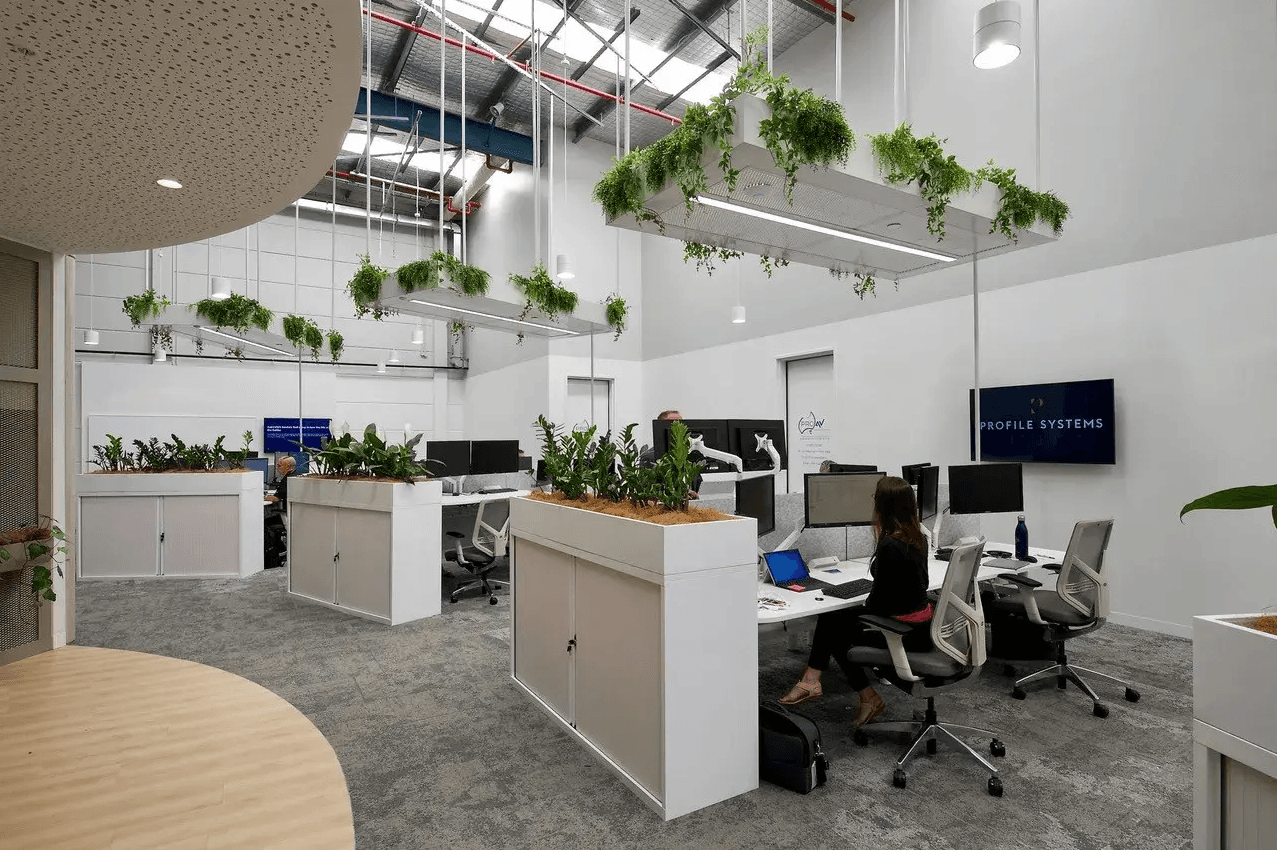
Open plan offices fail when acoustics are ignored. The promise of collaboration becomes a wall of noise, making focused work almost impossible. People put on headphones, book meeting rooms just to concentrate, or quietly resent the layout.
Solving this does not mean going back to private offices. It means using office partitions and glass walls, acoustic panels, soft furnishings, and deliberate furniture placement to manage sound without closing the office down. Quiet zones, felt-wrapped partitions, and ceiling-mounted baffles all reduce noise in different ways.
For reference, AS/NZS 2107:2016 sets out recommended design sound levels and reverberation times for building interiors, which is why acoustic planning should happen before construction starts. Stemar Group coordinates partitioning, ceiling work, electrical work, and furniture installation under a single project manager, so the acoustic strategy does not get lost among contractors.
Fitout Ideas That Attract and Retain Talent
The best workplaces make people feel considered, supported, and proud to show up, which can make a real difference in hiring and retention.
1. A reception area that sets expectations early
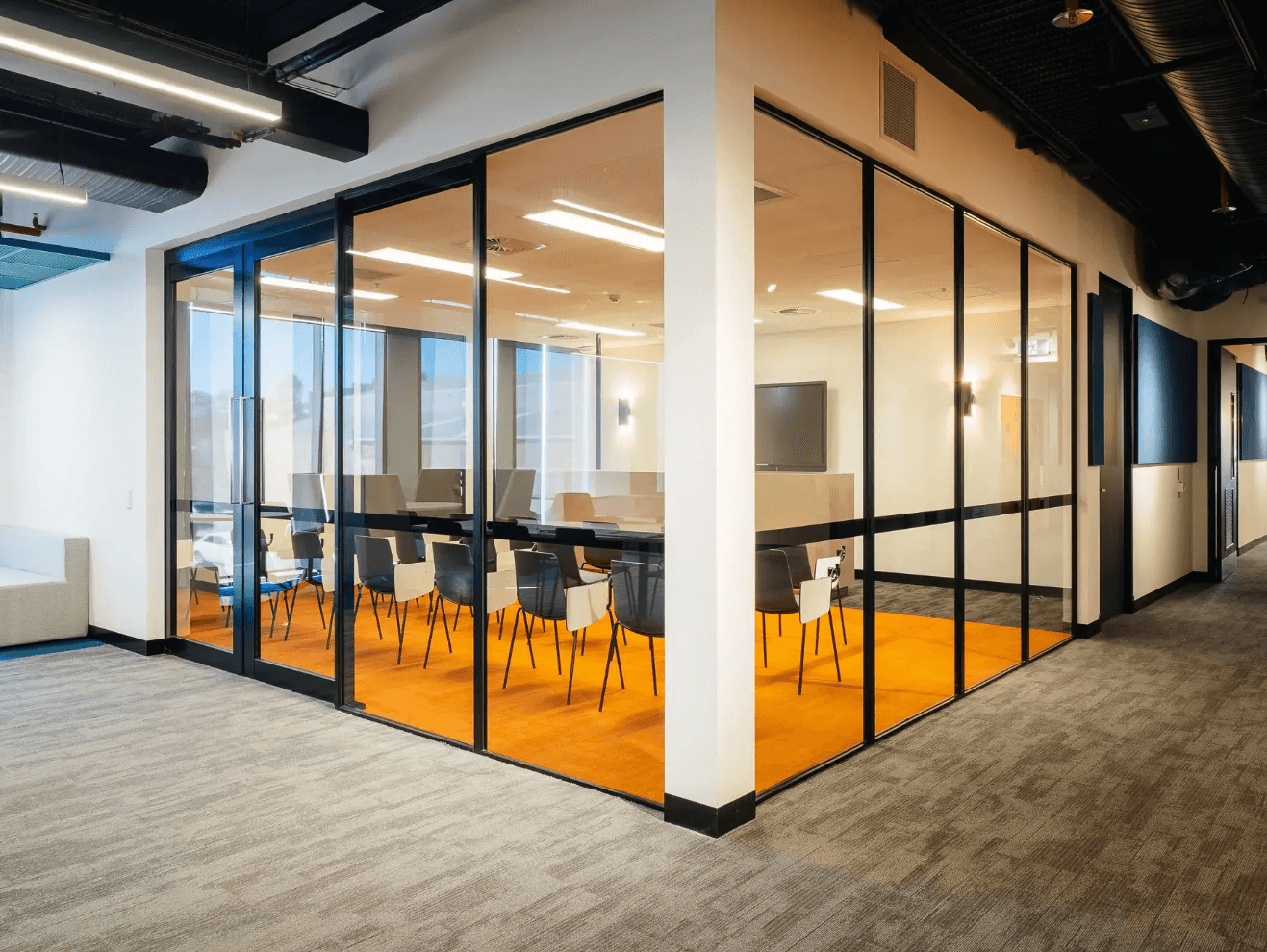
Your reception area is doing a job whether you designed it to or not. Candidates sitting in a tired waiting area with mismatched furniture and a faded logo are already adjusting their expectations. Clients arriving for a pitch meeting are forming impressions before anyone greets them.
Custom office fitouts start here for good reason. A branded feature wall, bespoke reception desk, and considered material choices communicate professionalism and permanence. Stemar Group's in-house carpentry team builds these details for Sydney businesses that need the first thirty seconds to count.
One financial advisory project needed a reception to signal trust without feeling corporate. Stemar Group built a timber-and-stone counter with integrated signage and a textured feature wall using the firm's brand colours.
This is where in-house carpentry matters. When the joinery team meets with the project manager, the design intent carries through without the usual gaps in the contractor handoff.
2. End-of-trip facilities and breakout spaces that justify the commute
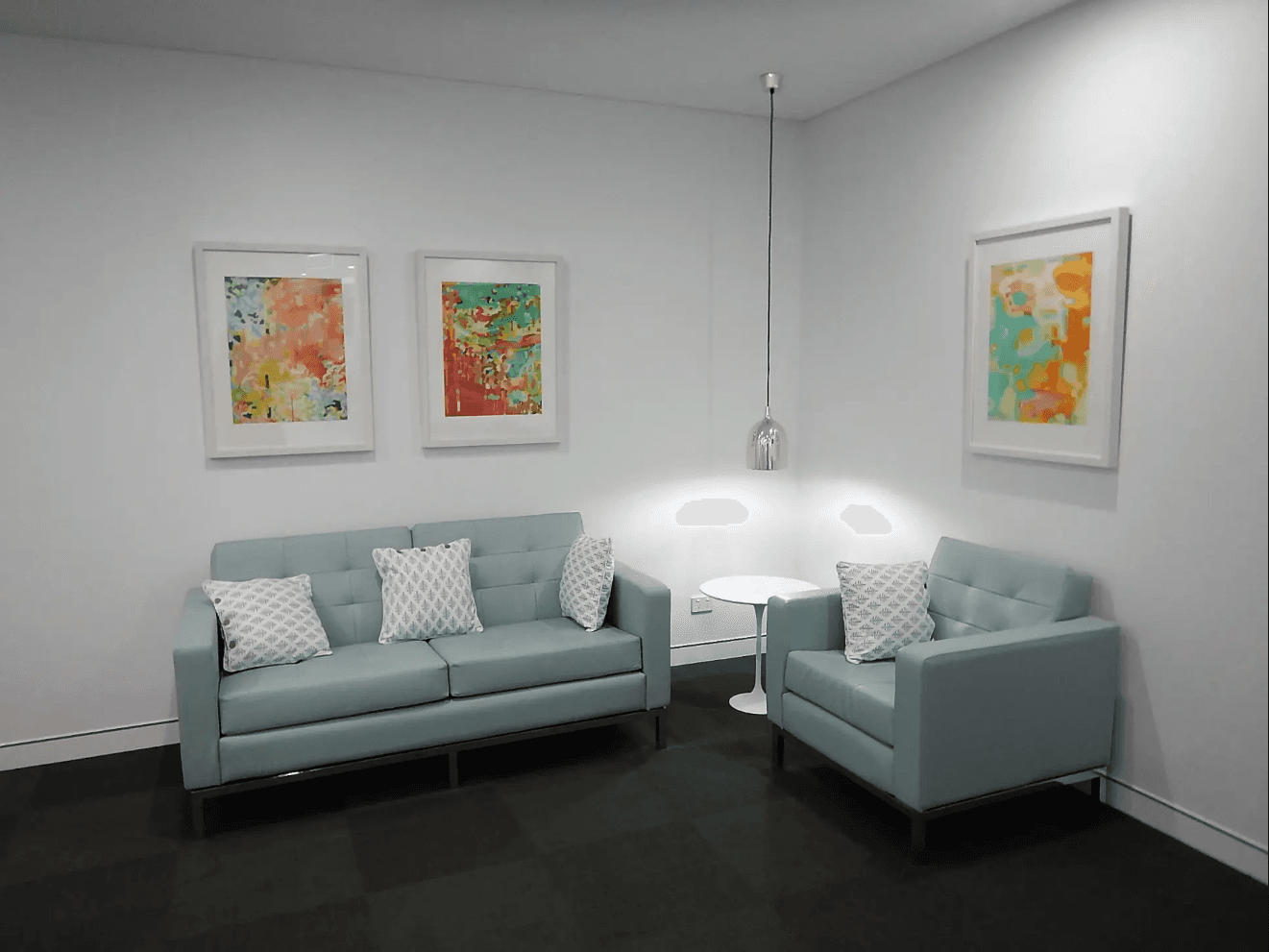
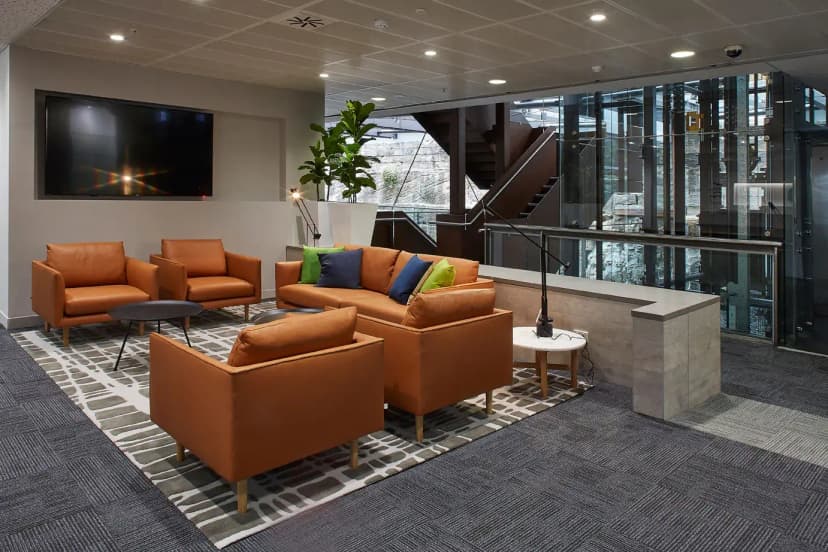
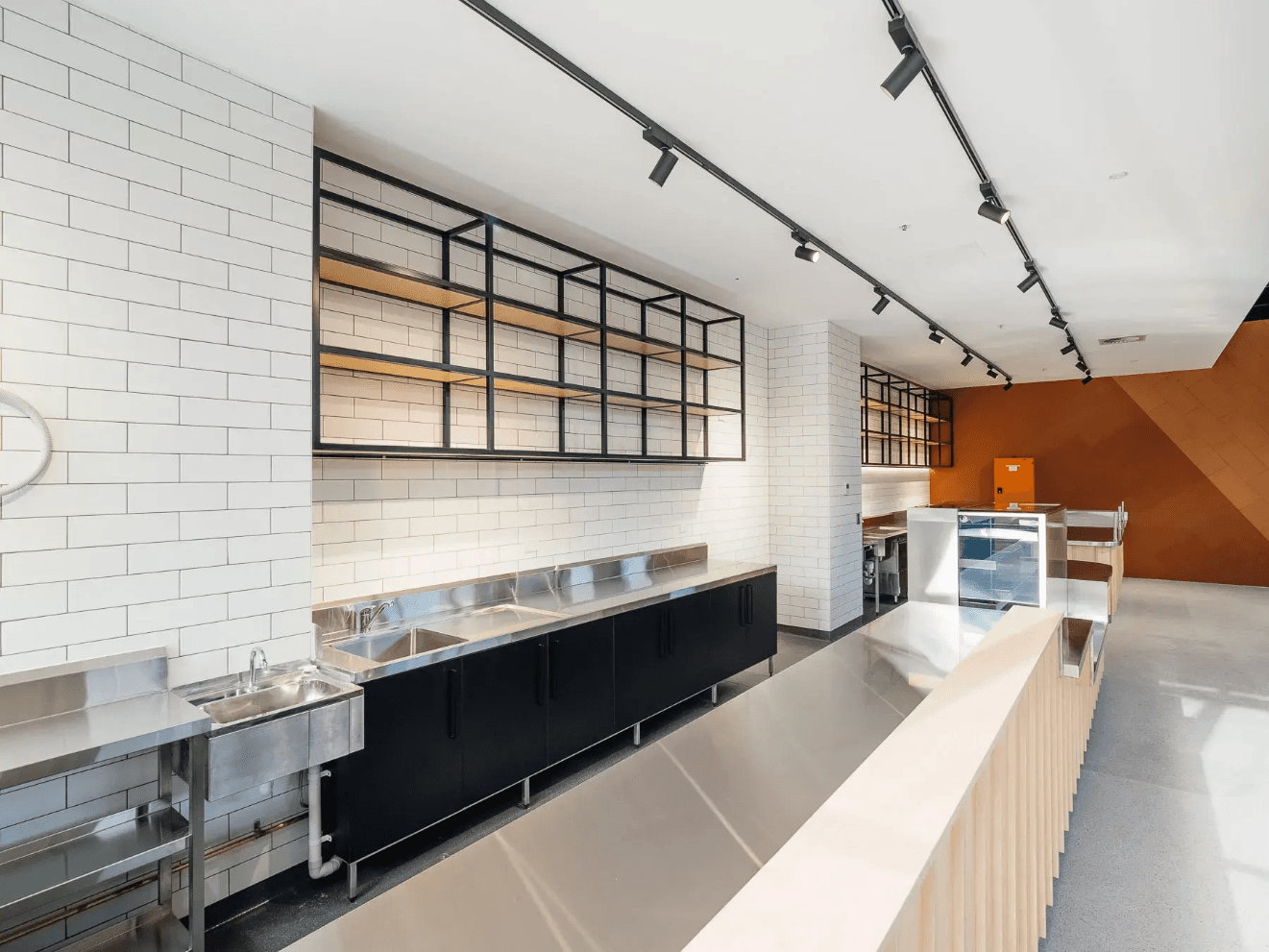
If you want hybrid workers in the office three days a week, the office needs to offer something that home cannot. A well-designed kitchen, lounge, or end-of-trip area signals that leadership values the team's daily experience. It is flight-to-quality thinking applied at the fitout level.
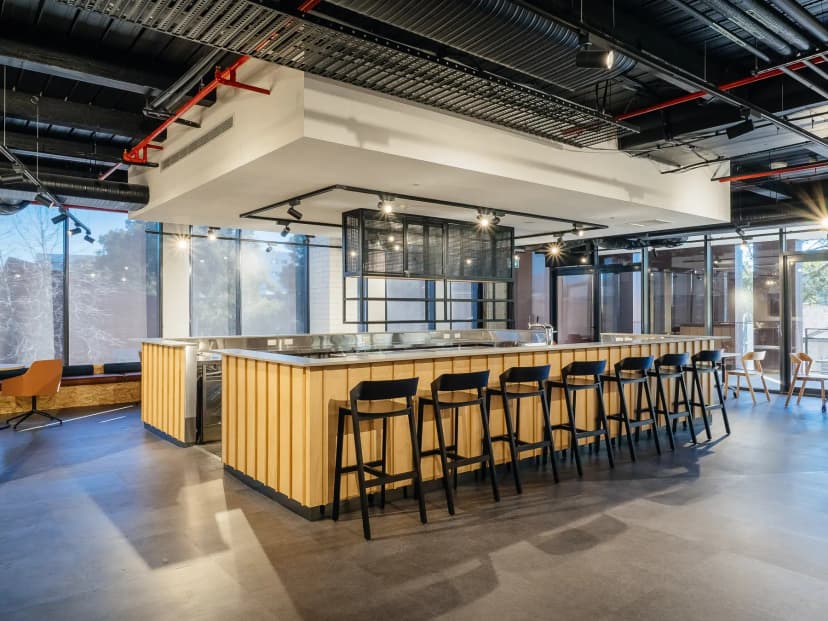
This is useful for mid-market businesses competing against larger firms with bigger budgets. A well-designed fitout in a B-grade building can feel premium without the A-grade price tag. Stemar Group has delivered commercial fitout projects across Sydney where the breakout space became the most-used area because it received the same care as client-facing zones.
Bike storage, showers, lockers, and a proper kitchen are not perks. For many candidates, these are baseline expectations.
3. Furniture selection that shapes how people work
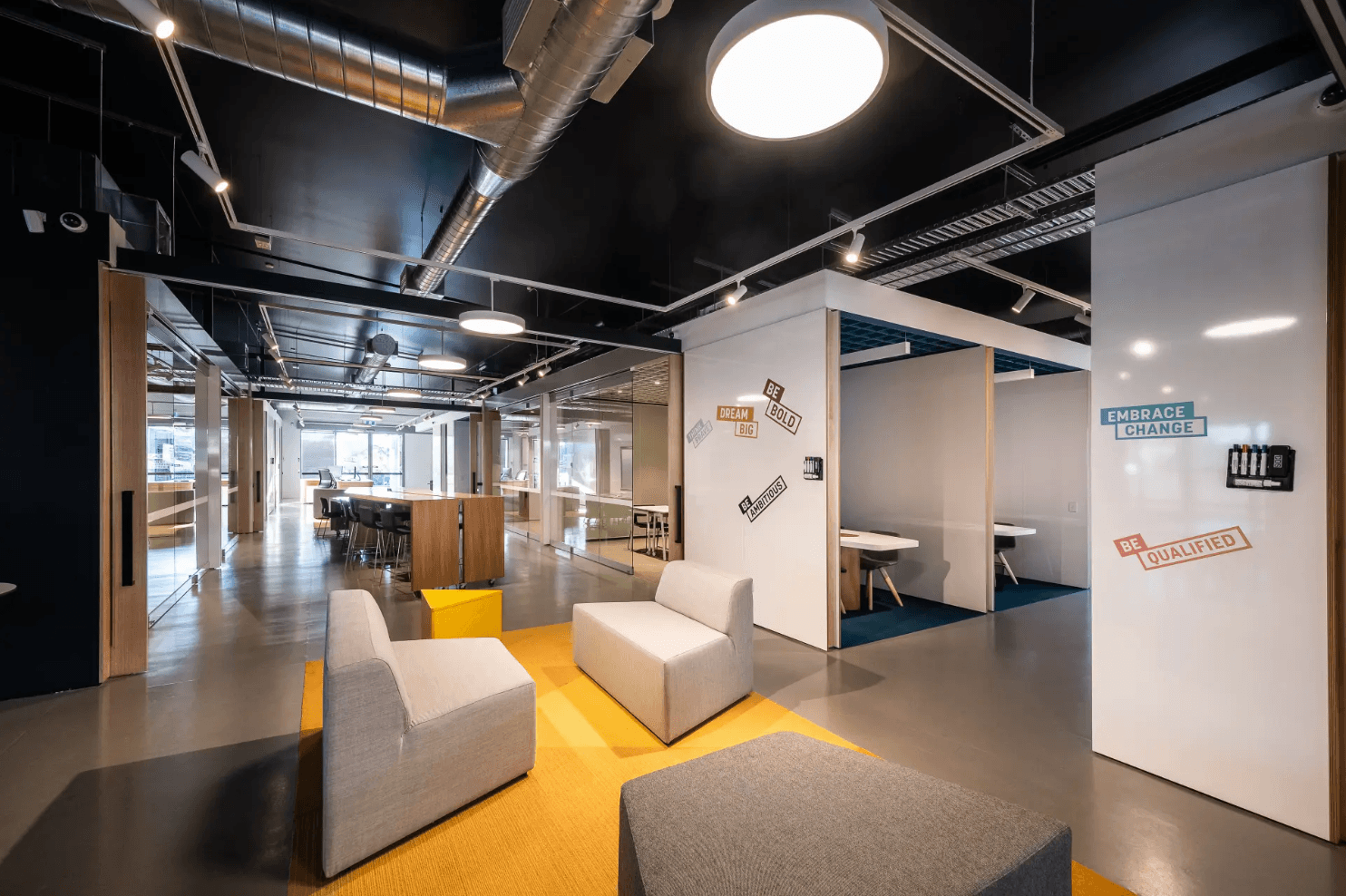
Office fitout furniture is a design decision, not a procurement task. The choice between sit-stand desks, modular seating, and acoustic pods affects layout, acoustics, power, data, and how the space feels to use every day.
Too often, furniture is selected after the fitout is complete. A bulky desk system blocks sightlines, budget chairs cause discomfort, and acoustic pods have nowhere to go because power was not roughed in.
Stemar Group integrates furniture selection into the fitout design and planning process from the start. This means power locations, data points, lighting zones, and acoustic treatments are coordinated around the furniture that will actually occupy the space. See how our design and planning process works.
Fitout Ideas That Impress Clients and Build Credibility
Client-facing areas should communicate professionalism before the first conversation begins, using layout, finishes, lighting, and branding to build trust.
1. Branded Environments
Colour, materials, signage, and feature walls can communicate professionalism, industry expertise, and company values to every person who walks through the door. This goes beyond a logo on the wall. It creates a consistent visual language that reinforces who you are.
A technology consultancy might use clean lines, concrete textures, and bold accent colours to signal innovation. A law firm might favour timber panelling, muted tones, and brass detailing to convey stability. The materials and finishes do the talking.
In a recent Stemar Group project for a Sydney-based professional services firm, branded elements were woven into the planning stage. The client's colour palette informed carpet tiles, feature wall framing, and finishes, creating a space that felt unmistakably theirs.
2. Glass-Fronted Meeting Rooms
Visible, well-designed meeting spaces create openness and capability. When a client walks past a glass-fronted meeting room and sees good lighting, clean finishes, and an organised setting, it reinforces confidence.
The practical benefits are strong too. Glass meeting rooms allow natural light deeper into the floor plate, maintain visual connection, and make a compact office feel larger.
Stemar Group has delivered glass partitions and meeting room walls across a range of Sydney offices, from single rooms to full floor-plate glazing systems. The key is specifying the right glass thickness and acoustic seal, so the rooms are useful for confidential conversations, not just visually impressive.
Fitout Ideas That Make a Small Footprint Work Harder
A smaller office can still feel spacious and efficient when every zone, storage solution, and piece of furniture is planned with purpose.
1. Smart storage and joinery that reclaim usable floor space
Clutter shrinks a workspace faster than a small floor plate does. Filing cabinets lining walls, boxes stacked in corners, and personal items spilling off desks all eat into usable space and make the office feel cramped.
Custom cabinetry, under-desk storage, and integrated shelving can reclaim significant floor area. A wall of built-in storage with a bench seat doubles as a waiting area. Lockers replace desk pedestals and free up legroom. Stemar Group builds these solutions to fit the exact space, which matters when every square metre counts.
2. Multi-purpose zones that flex between uses
A single space can serve as a town hall, training room, and client presentation area with the right furniture, AV setup, and layout. Stackable seating, a retractable screen, and well-placed power turn one room into three.
This approach helps growing businesses avoid upsizing their lease prematurely. If you can get another two years out of your current space by making it work harder, the fitout pays for itself in avoided rent escalation.
| Fitout level | Indicative scope | Best for |
|---|---|---|
| Basic | Cosmetic refresh, minor layout changes, selected furniture, light electrical adjustments | Teams needing a cleaner workplace without major construction |
| Mid-range | New partitions, lighting upgrades, joinery, furniture coordination, breakout areas | Growing businesses that need better performance from the same footprint |
| Premium | Bespoke joinery, branded reception, acoustic strategy, glazing, end-of-trip upgrades | Client-facing teams where first impressions and staff experience carry commercial value |
Not every idea requires a full strip-out. Some changes can be delivered in stages or after hours to minimise disruption. Stemar Group offers staged delivery and starts every project with a fixed-price quote. If you are weighing up costs, read about the different fitout levels in Sydney to benchmark your budget against real project data.
How to Move from Inspiration to a Fitout Plan
The next step is not picking a paint colour. It is understanding which ideas solve the specific problems your business is facing right now, and which ones can wait.
A design consultation assesses your current space, identifies the priorities with the biggest impact, and maps ideas to your budget and timeline. Stemar Group's office fitout in Sydney approach is straightforward: you deal directly with the owner, and every quote is fixed-price with no hidden surprises.
If you want a structured approach, our office fitout planning guide walks through each stage from lease review to handover. It is a practical companion to the ideas covered here.
When you are ready to explore which ideas work for your space and budget, Book a design consultation with Stemar Group and start with the problems worth solving first.