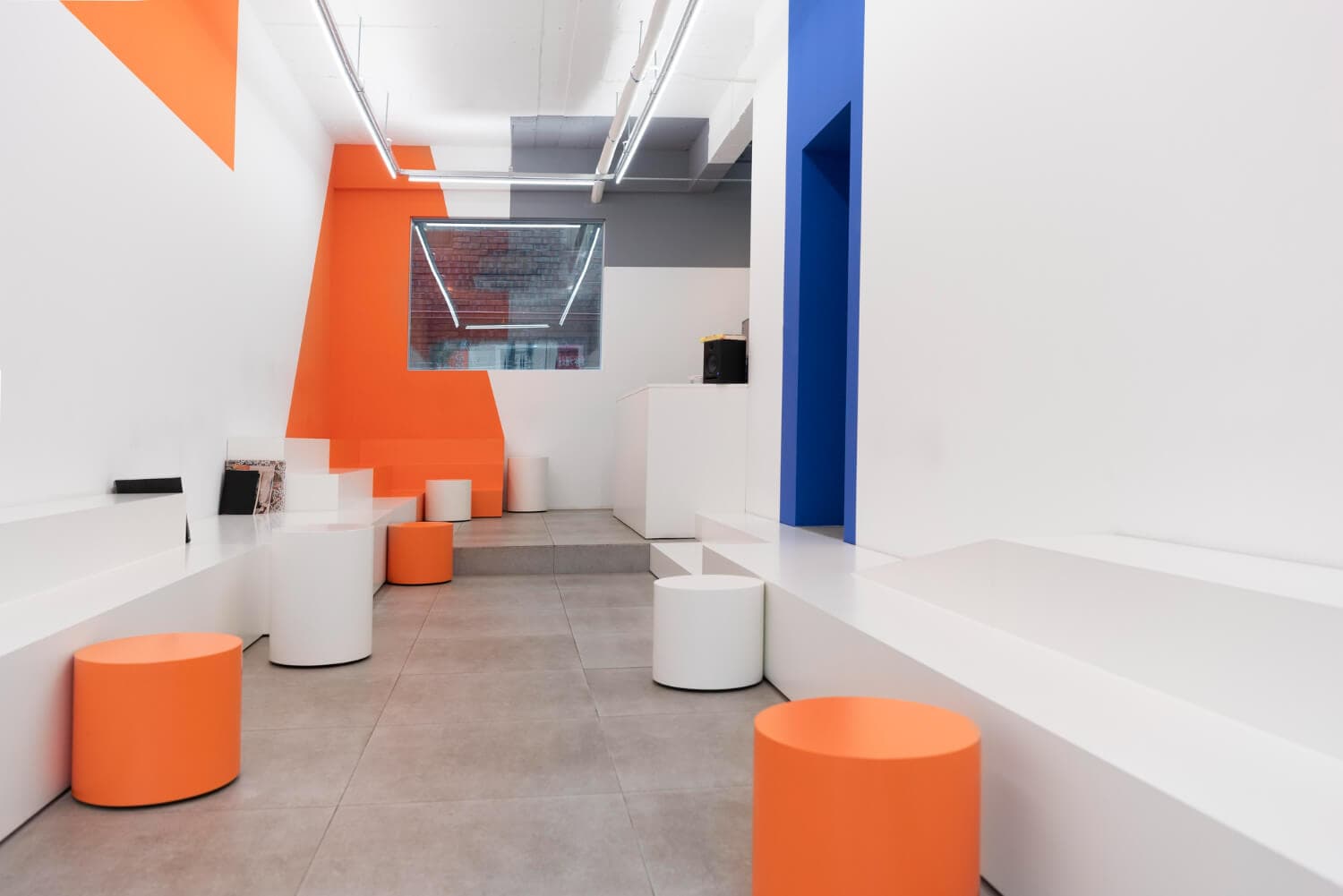
Three forces are converging on Sydney offices right now. Return-to-office mandates have matured past the experimental phase. Businesses have several years of hybrid work data to draw on. And from 1 January 2026, AASB S2 mandatory climate reporting kicks in for Group 2 entities. Scope 3 implications now reach into fitout decisions, and that changes the game for office design in 2026.
Last updated: March 2026
Why 2026 Is a Turning Point for Sydney Office Design
AASB S2 becomes mandatory from 1 January 2026 for Group 2 entities, those with consolidated revenue between $200 million and $500 million or meeting two of three size tests. Scope 3 emissions include tenant fitouts and office operations. Fitout decisions made in 2026 will appear in 2027 financial disclosures. Office design trends 2026 are no longer just about aesthetics or culture. They carry compliance weight.
If you run a growing business with 15 to 150 staff, you already know the frustration. Large builders deprioritise you. Small operators lack the capability for anything beyond basic commercial office design trends. You need enterprise-grade workspace outcomes from a team that actually turns up. This guide covers the modern office design trends that matter for mid-market Sydney businesses, with practical refurbishment actions for each one.
2025 vs 2026 Office Design Priorities
| Area | 2025 Approach | 2026 Reality |
|---|---|---|
| Sustainability | Aspirational best practice | Auditable compliance under AASB S2 |
| Acoustics | Partial-occupancy tolerances | Full-occupancy acoustic planning |
| Meeting Technology | Retrofitted AV setups | Purpose-designed tech-integrated rooms |
| Workplace Comfort | Generic corporate finishes | Resimercial design for talent retention |
| Work Model | Hybrid experiments | Activity-based working as operational framework |
Resimercial Design Brings Residential Comfort to Commercial Spaces
What Is Resimercial Design?
Resimercial design is the deliberate use of residential-style materials, furniture, and finishes in commercial workspaces to create warmth and comfort that supports longer, more productive in-office stays.
No competitor in the current office interior design trends conversation is naming this approach directly, but it is one of the most practical shifts happening in 2026.
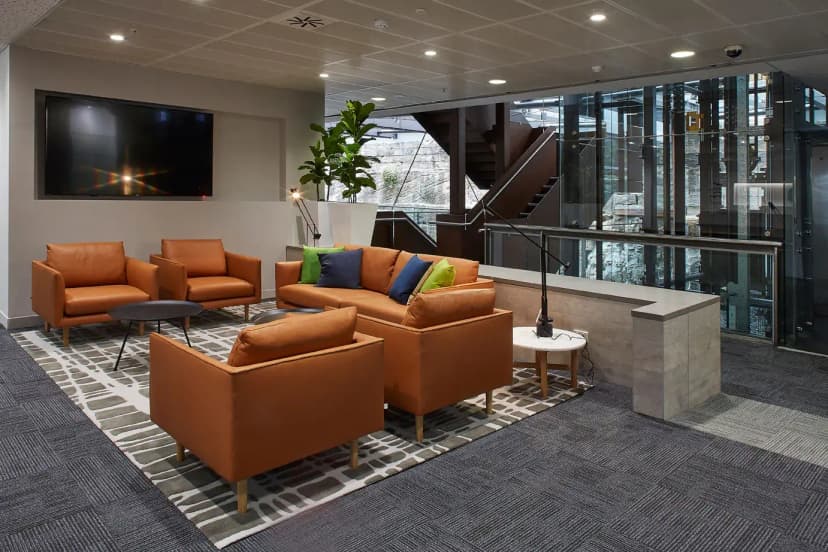
For industrial business tenants across Western Sydney, this looks like soft furnishings in breakout areas, residential-style pendant and floor lighting replacing harsh fluorescents, and warm timber veneers and fabric textures where hard laminate and steel once dominated. These are not cosmetic upgrades. They signal to skilled workers that your workspace is modern and people-focused, whether you are in Smithfield, Wetherill Park, or anywhere in the Western Sydney corridor.
Industrial businesses competing for talent against CBD corporate employers can close the gap with resimercial touches in high-visibility zones. A staged refurbishment of breakout areas and reception zones delivers the impact without disrupting core operations. For more practical implementation examples, explore these office refurbishment ideas.
Acoustic First Planning for Full Occupancy Offices
Open-plan offices designed or last refurbished when only 30 percent of desks were occupied are now hitting full capacity. Return-to-office mandates filled the seats. The acoustics did not keep up. Noise is the single biggest productivity complaint in full-occupancy open plan spaces.
Practical acoustic interventions fall into three categories:
- Acoustic pods for private calls and focused work, available as freestanding units that require no structural modification.
- Sound-masking systems that raise ambient background noise to reduce speech intelligibility at distance.
- Zoned layouts that physically separate collaborative areas from quiet zones using acoustic screens, ceiling baffles, and wall treatments rated by their Noise Reduction Coefficient (NRC). An NRC of 0.85 or above on ceiling tiles is a reasonable target for open-plan zones.
Speech privacy between zones should be a core design objective, not an afterthought.
Acoustic retrofits can be phased across floors or zones. After-hours installation keeps daily operations running while the workspace improves. Multi-trade coordination under one project manager is critical here, because acoustic work touches ceiling systems, electrical, joinery, and sometimes HVAC ductwork.
Biophilic Design and Dedicated Wellbeing Zones
Biophilic design goes well beyond putting a few pots in the corner. It is an integrated system: natural light optimisation through office design and layout changes, living green walls with low-maintenance species suited to Sydney's climate, natural material palettes using stone, timber, and wool, and views to greenery or nature-inspired artwork where external views are limited.
Wellbeing zones are the companion piece. These are dedicated spaces within the floorplan for decompression, stretching, or informal social connection that is distinct from work collaboration. They are not a luxury. They are a retention tool.
The refurbishment action here is straightforward. Wellbeing zones can be carved from underused storage, oversized print rooms, or redundant individual offices. A good fitout partner identifies these opportunities during a site walkthrough. Most businesses have more recoverable space than they realise.
Activity Based Working as the Operational Framework
Activity-based working (ABW) is not a trend in isolation. It is the operational structure that makes every other office design trend actually function. Acoustics, wellbeing zones, resimercial breakout areas: none of these deliver their full value without ABW as the organising principle.
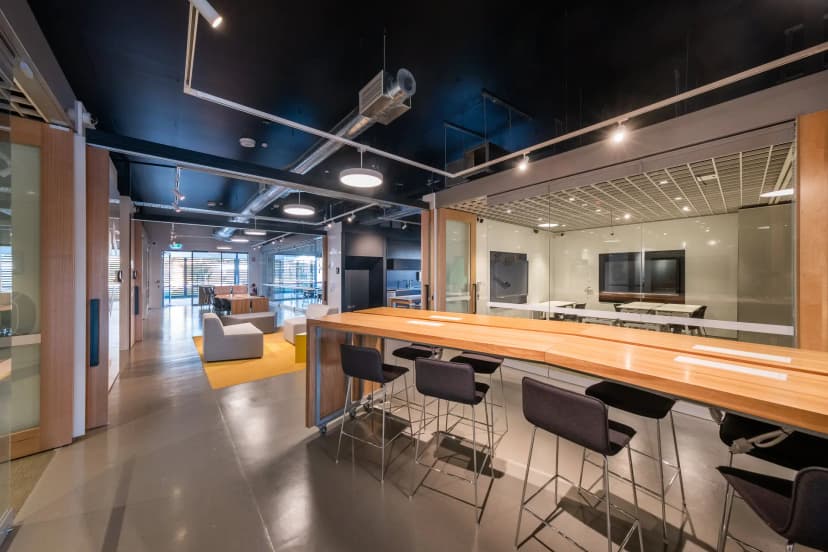
ABW is simple in concept. Instead of assigned desks, the workspace is divided into zones designed for specific activities: focused individual work, collaborative team sessions, informal catch-ups, video calls, and quiet concentration. Staff move between zones based on what they are doing, not where they sit.
ABW is also the physical framework that makes hybrid schedules work in practice. For a dedicated deep dive on designing for hybrid teams, see the hybrid office design guide.
The refurbishment action involves removing fixed desk banks, adding varied furniture settings, and upgrading power and data access across zones. This can be staged by floor or department, which keeps the business running throughout the transition. Because you are touching electrical, data, joinery, and flooring in a single scope, having one project manager across all trades prevents delays and rework.
Get in touch to start mapping your own workspace zones.
Sustainability and NABERS Driven Material Choices
This is where 2025 office design trends and 2026 reality diverge sharply. Sustainability in fitout is no longer optional best practice. For Group 2 entities, it is auditable and material to financial reporting.
AASB S2 becomes mandatory from 1 January 2026, aligned with ISSB standards. Australian mid-market businesses now face the same disclosure rigour as global corporates. Group 2 entities must report climate risks and opportunities in their financial statements. The first reporting period is FY2026.
Scope 3 emissions include tenant fitouts and office operations. That means material selection, energy consumption, and waste from your fitout are directly relevant to compliance. Practically, this translates to specific choices: low-VOC paints, FSC-certified timber, recycled content in carpet and ceiling tiles, LED lighting with smart controls, and HVAC optimisation. These are not aspirational targets. They are reportable metrics.
NABERS Energy ratings and Green Star fitout requirements provide the NSW-specific frameworks that guide compliant design. Your fitout partner should be specifying materials and systems that align with these frameworks from day one, not retrofitting compliance after the fact.
A sustainable office refurbishment addresses compliance, reduces operating costs, and creates a healthier workspace in a single scope. The urgency is real: fitout decisions made in 2026 appear in 2027 disclosures. Waiting is a compliance risk, not a strategic choice. For a step-by-step approach, read our guide to planning a sustainable office refurbishment.
Technology Integrated Meeting Spaces
Hybrid meetings are permanent. Rooms designed with a single screen bolted to the wall and a speakerphone in the middle create a poor experience for remote participants. That undermines the hybrid model your business has spent years building.
The shift is from retrofitted AV setups to purpose-designed meeting rooms where technology is embedded from the start. This means integrated screens sized to the room, ceiling microphone arrays that pick up every voice evenly, consistent camera angles that frame in-room participants naturally, and wireless presentation systems that eliminate cable hunting.
Meeting room upgrades are one of the lowest-disruption refurbishment interventions available. They can be done room by room, often after hours, with no impact on the wider workspace. A single project manager keeps AV, electrical, and joinery trades aligned to one scope and timeline.
Brand Led Workspace Identity
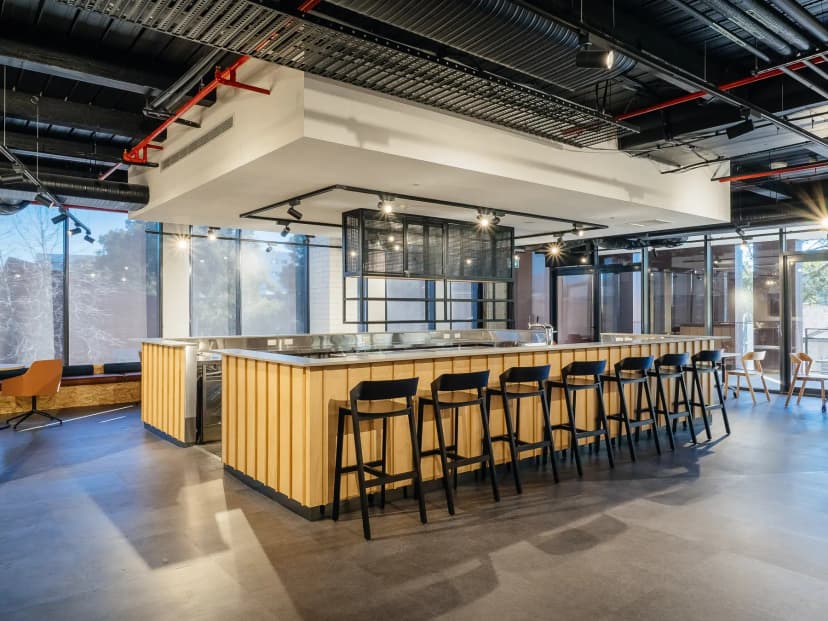
Workspaces are becoming deliberate expressions of company culture and brand. Not generic white-box tenancies. This includes colour palettes drawn from brand guidelines, feature walls that communicate company values or story, and material choices that reflect business personality.
For industrial businesses across Greater Western Sydney, this matters for recruitment and client confidence. When a potential hire or client walks into your office, the space should communicate who you are before anyone says a word. A workspace in Wetherill Park can carry the same brand presence as one in the CBD. It just needs intentional design.
Brand integration is typically layered into a broader refurbishment scope through signage, feature joinery, colour selection, and reception design. It adds minimal cost when planned from the start rather than bolted on later.
How to Bring These Trends Into Your Existing Workspace
Most Sydney businesses are not building new offices from scratch. They are working within existing tenancies and need to modernise without shutting down operations. Refurbishment is the practical path.
A good refurbishment partner stages the work across zones or after hours so your team keeps working while the space improves around them. That requires proper project management, not just a couple of trades turning up when they are available.
If your current office was last fitted out more than five years ago, it is likely designed for a different way of working. A sustainable office refurbishment is the most direct way to align your workspace with 2026 standards and compliance requirements.
We provide fixed-price quotes with no hidden surprises, multi-trade coordination under one project manager, and local council approval expertise. A typical staged refurbishment runs six to ten weeks depending on scope. Our team is based in Wetherill Park, in the heart of Sydney's industrial heartland. We understand commercial tenancies in this part of Sydney because we work in them every day.
Ready to align your workspace with 2026 standards? Talk to our team to start the conversation.