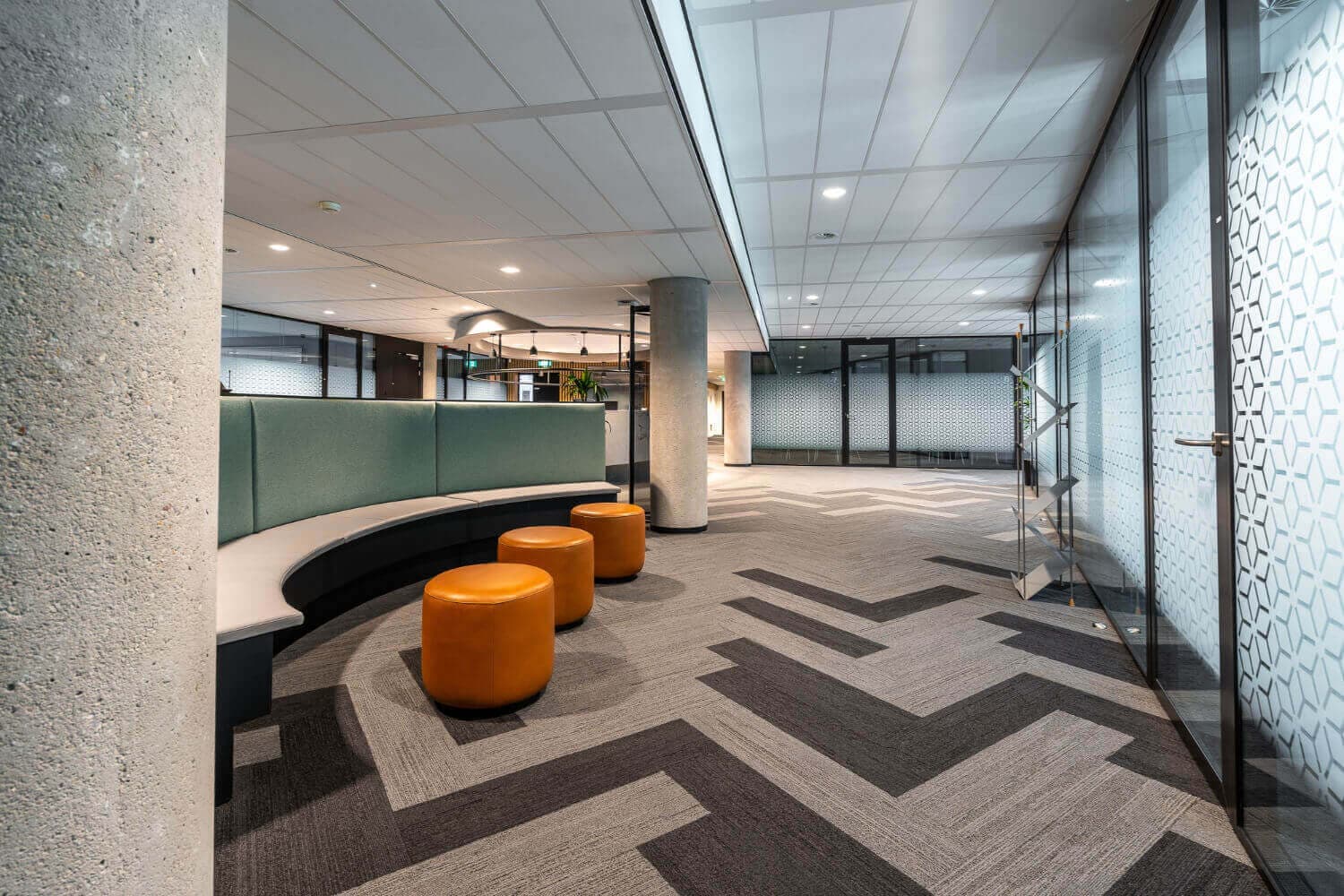
Australian employers are pushing hard on return-to-office mandates. Robert Half research from February 2025 found that 39% of Australian employers now mandate five days in the office. The directive is clear. But the offices people are returning to were either hollowed out during the pandemic or left exactly as they were in 2019.
Return to office design is now a practical priority for Sydney businesses, not a theoretical exercise. Here is the tension every business owner feels: mandating attendance is the easy part. Making the office worth the commute is the hard part. That gap between mandate and experience is driving demand for hybrid office design solutions and a wave of refurbishment across Sydney.
The numbers tell the story. Accenture reports that 83% of employees prefer a hybrid working model. Even businesses mandating full return face an expectation gap with their people. Gartner data shows 39% of knowledge workers globally adopted hybrid by end of 2023, with only 9% fully remote. Hybrid office design is not a trend. It is a practical response to a real business problem: your existing space no longer matches how your team actually works.
Based on hybrid office refurbishments delivered across Sydney since 2022. Last updated: March 2026.
What Hybrid Office Design Actually Means in a Refurbishment Context
What Is Hybrid Office Design?
Hybrid office design is the reconfiguration of an existing commercial space to support fluctuating daily headcounts and mixed work modes, where some team members are in-office and others work remotely on any given day.
For most Sydney businesses, hybrid office design does not mean building from scratch. It means reconfiguring an existing commercial space so it supports fluctuating daily headcounts and mixed work modes. Monday might see 40% of desks occupied. Wednesday might hit 90%. The space needs to handle both without feeling empty or overcrowded.
Pre-COVID layouts assumed fixed desks, consistent headcount, and in-person-only meetings. None of those assumptions hold true now, even for businesses mandating full return. People spend more time on video calls. Teams collaborate in bursts rather than sitting side by side all day. The old rows of assigned desks with a couple of boardrooms down the hall simply do not work.
The good news is that most hybrid redesigns are refurbishments, not full rebuilds. The building shell stays the same. The internal layout, services, and finishes change. Understanding the difference between office renovation vs refurbishment matters here, because it affects scope, cost, and timeline. UNSW research reinforces that genuine flexibility must address the physical workspace, diversity of people's needs, and the power of technology.
Five Design Zones Every Hybrid-Ready Office Needs
Activity-based design is not new. But applying it as a refurbishment strategy for existing offices requires a different mindset. You are not designing on a blank floor plate. You are reworking what is already there. These five zones form the backbone of a hybrid work office layout that actually functions.
1. Focus pods or quiet rooms for deep work. These replace the dead corners or underused storage rooms in a typical pre-COVID layout. A phone-booth-sized acoustic pod or a small enclosed room with a desk and power gives people a reason to come in for concentrated work instead of staying home. Two to four pods per floor is a practical starting point for teams of 30 to 50.
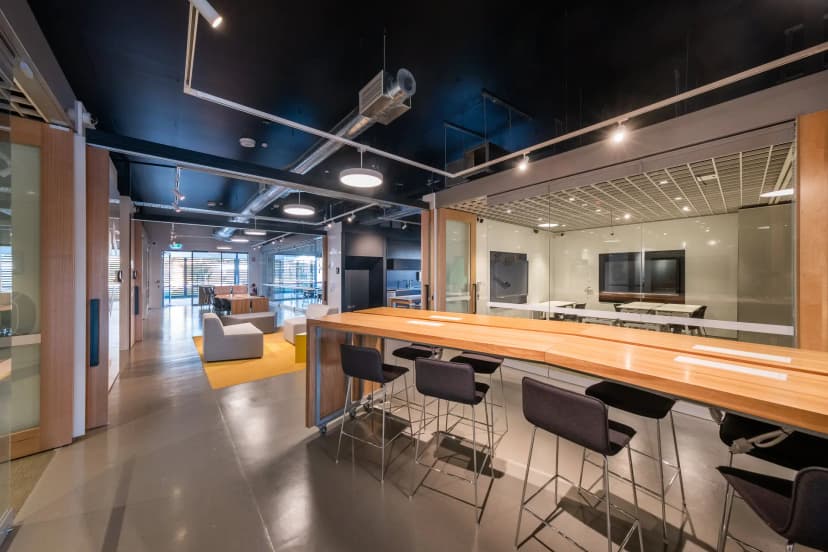
2. Collaboration hubs for team days and workshops. These replace the old open-plan desking clusters that assumed everyone collaborated all day. A collaboration hub has writable walls, flexible furniture that can be reconfigured in minutes, and enough space for a team of eight to twelve. Think moveable tables on castors, not fixed boardroom setups. Good office design and layout for modern workspaces puts these hubs adjacent to social spaces so energy flows naturally between structured and informal interaction.
3. Hot-desking or desk-booking areas that flex with daily headcount. These replace rows of assigned desks. The ratio matters. If your peak attendance is 70% of headcount, you do not need 100% desk provision. A 7:10 desk-to-person ratio with a simple booking system saves floor space and frees up room for the other zones on this list. Every workpoint needs power, data, and a monitor connection.
4. Meeting rooms with enhanced AV for hybrid calls. Pre-COVID meeting rooms had a phone spider in the middle of the table. That does not cut it when half the participants are on screen. Refurbishing meeting rooms means ceiling-mounted cameras, directional microphones, large displays, and reliable connectivity. Smaller rooms with better technology outperform large boardrooms with a laptop propped open.
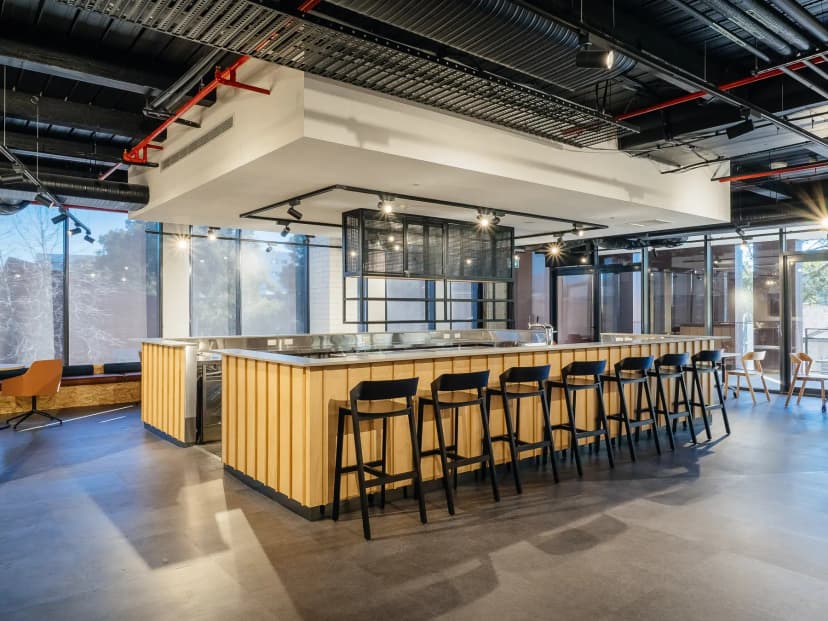
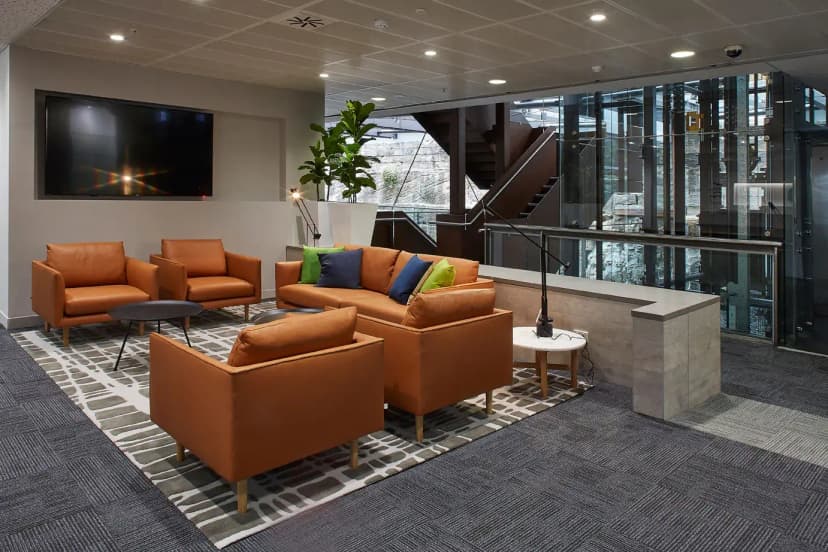
5. Social and amenity spaces that make the commute worthwhile. This is the zone home offices cannot replicate. A well-designed kitchen, a breakout lounge with comfortable seating, a casual meeting area with coffee. These spaces replace the cramped kitchenette that most pre-COVID offices offered. They are what pull people in on days they could work from home.
For more specific interventions across each of these zones, our guide to office refurbishment ideas covers practical options that solve real hybrid challenges.
Why Acoustics Can Make or Break Your Hybrid Refurbishment
Open-plan offices that felt perfectly fine at 30% pandemic occupancy become unbearable at 80% when mandates bring everyone back. The noise problem is the number one complaint in returned-to-office surveys, and it is the fastest way to undermine a refurbishment investment. The issue is compounded by hybrid calls, where half the office is on video calls simultaneously, each person speaking louder to be heard over the person next to them.
Practical refurbishment solutions exist that do not require gutting the space. Acoustic panels on walls and ceiling baffles absorb reflected sound. Zoning strategies physically separate loud collaboration areas from quiet focus zones using partitions, joinery, or deliberate floor plan arrangement. Sound-masking systems add a low-level background hum that reduces the intelligibility of nearby conversations. These are additions to an existing space, not structural changes, and can be retrofitted during a staged refurbishment.
The Technology Layer Your Refurbishment Needs to Include
Technology is one of three pillars of genuine workplace flexibility, alongside physical space and people's diverse needs. Yet most businesses treat tech as a separate IT project that happens after the builders leave. That is where hybrid setups fail.
Three essentials need to be scoped into the refurbishment itself. First, reliable AV in every meeting room so hybrid calls actually work. Cameras, microphones, displays, and cabling all need to be specified and installed during construction. Second, desk-booking systems that match flexible seating, with hardware like screens at entry points, sensors at desks, and network infrastructure coordinated as a construction task. Third, power and data access at every workpoint including hot-desks.
When electrical, data, joinery, and AV integration all sit under one project manager, the gaps that cause hybrid tech to fail simply do not appear. Cabling routes are planned before walls go up. Power locations match furniture layouts. AV mounting points are reinforced during construction, not patched in later.
Even Full-Return Offices Need a Redesign
That 39% of Australian employers mandating five days in the office does not mean those businesses can skip the redesign conversation. The office they are bringing people back to was configured for a different era of work.
Pre-COVID layouts assumed fewer video calls, less collaboration software, different team structures, and often different headcounts. Many Sydney businesses have grown, contracted, or restructured since 2020. The desks are the same but the team is not. Current commercial office design trends reflect this reality. Gartner data shows only 9% of knowledge workers are fully remote, meaning the vast majority are in some form of regular office attendance. The question is not whether people will be in the office. It is whether the office is set up for how they actually work when they get there.
Refurbishment is relevant whether a business is hybrid, flexible, or fully in-office. The common thread is that the old layout no longer matches current work patterns. For a broader view of where commercial office design is heading, our piece on office design trends 2026 covers the full landscape beyond hybrid.
Is Your Office Hybrid-Ready? A Quick Audit
Five questions to assess whether your current space needs a hybrid refurbishment. Be honest.
- Desk-to-headcount ratio. Do you have more desks than your peak daily attendance requires, wasting floor space that could serve a better purpose?
- Meeting room AV. Can someone working from home join a meeting room call and see every face, hear every voice, and read the whiteboard without asking people to repeat themselves?
- Acoustic zoning. Are your quiet focus areas physically separated from your collaboration and social zones, or does noise bleed across the entire floor?
- Flexible workpoints. Can a team member sit anywhere and immediately access power, data, and a screen connection without adapters or extension leads?
- Social and amenity spaces. Would your team describe the kitchen and breakout areas as a genuine draw, or as an afterthought they tolerate?
If you answered no to three or more, your space is likely holding your team back. The gap between your return-to-office mandate and your team's daily experience is costing you in engagement, productivity, and retention. Talk to our team about your space.
How to Refurbish for Hybrid Without Disrupting Your Business
The biggest fear for any business considering a refurbishment is operational disruption. You cannot send everyone home for six weeks while the builders work. Especially not when you have just mandated their return.
Staged delivery solves this. A good refurbishment partner breaks the project into phases, completing one zone while the team works from another. After-hours and weekend work handles the noisy or disruptive trades without affecting business hours. Phased implementation means you can start using completed zones immediately while the next phase is underway.
Cost uncertainty is the other fear. Fixed-price quotes with no hidden surprises remove that risk. You know the number before work starts, and that number does not change. A refurbishment partner with local council approval expertise across Sydney's commercial zones ensures compliance requirements do not become costly surprises.
If your space needs to work harder for a hybrid or returning team, commercial office refurbishment is the practical next step. No guesswork, no disruption, no surprises. Get in touch to discuss your project.
Frequently Asked Questions
How do I know if my desk-to-headcount ratio is wrong?
If you have more desks than your peak daily attendance requires, you are wasting floor space that could be used for focus pods, collaboration hubs, or social areas. A 7:10 desk-to-person ratio is a practical starting point for hybrid teams of 30 to 50.
What AV setup do hybrid meeting rooms need?
Hybrid meeting rooms need ceiling-mounted cameras, directional microphones, large displays, and reliable connectivity so remote participants can see every face, hear every voice, and read the whiteboard without asking people to repeat themselves.
Can I refurbish for hybrid without shutting down the office?
Yes. Staged delivery breaks the project into phases, completing one zone while the team works from another. After-hours and weekend work handles noisy trades without affecting business hours.